


Ever wonder how a t-shirt can perfectly capture the raw energy of a Bushwick street mural or the electric buzz of a Coney Island summer night? Often, the secret is a brilliant technique called Direct-to-Film (DTF) printing.
Think of it like this: DTF is a way to create a super high-quality, artist-grade transfer that bonds directly and permanently with fabric. This allows creators to press incredibly detailed, full-color designs onto almost any material you can imagine, turning everyday apparel into a canvas for Brooklyn’s story.
The Secret Tech Behind Your Favorite Brooklyn Graphic Tee
In a place as creatively charged as Brooklyn—a borough that was once home to innovators like Walt Whitman and Jean-Michel Basquiat—every t-shirt tells a story. It’s more than just fabric and ink; it’s a wearable piece of culture, a bold statement. For years, bringing those intricate, vibrant stories to life on a shirt was a real challenge.
Traditional methods had their limits, often struggling with complex colors or picky fabrics. This is where the magic of DTF printing comes in, giving artists and brands the perfect tool to express the authentic, unapologetic soul of Brooklyn.
Imagine a technology that doesn't just print on a shirt, but actually infuses it with the artist's original vision. DTF bridges that gap between a digital design on a screen and a tangible piece of art you can wear. It makes it possible to capture the subtle gradients of a sunset over the Williamsburg Bridge or the sharp, chaotic lines of street art found at 5 Pointz before its controversial whitewashing.
This technology frees creators from the technical constraints that once held them back, opening up a whole new world for apparel design.
A New Canvas For Creativity
The DTF process empowers designers to treat every single garment as a blank canvas, no matter its color or what it’s made of. Unlike older methods that were often stuck with cotton, DTF printing works beautifully on everything from classic tees to polyester hoodies and denim jackets.
This versatility is a perfect match for a culture as diverse and dynamic as Brooklyn’s. It opens the door for:
- Limitless Color: You can reproduce photorealistic images and designs with an infinite color palette, making sure every last detail is captured perfectly.
- Small-Batch Freedom: It's ideal for producing limited-edition runs and exclusive drops without the massive setup costs of other printing methods.
- Unmatched Detail: The integrity of even the most complex designs is maintained, from the finest lines to the most intricate textures.
DTF printing is more than just a technical process; it’s a cultural enabler. It gives local artists and brands the power to translate the borough’s distinct energy into wearable art that connects with people everywhere.
This creative freedom is backed by some serious industry momentum. The global DTF printing market was valued at a massive USD 2.56 billion in 2023, and it's growing fast, all thanks to the demand for personalized and unique fashion.
For brands like The Brooklyn Initiative, this means we can turn around one-of-a-kind tees much faster while cutting production costs by up to 30-50% compared to other methods on short runs. To see how they stack up, check out our guide on what screen printing on fabric is all about.
How A Brooklyn Design Comes To Life With DTF
Every great Brooklyn tee starts as an idea, a flash of inspiration that bottles a bit of the borough's magic. It could be the gritty silhouette of the Domino Sugar Factory at dusk or a bold graphic echoing the street style of Bed-Stuy. That initial vision is where the Direct to Film (DTF) journey kicks off, transforming a digital concept into a piece of wearable art.
Think of it as a kind of modern alchemy, much like how Brooklyn’s industrial waterfronts were transformed into the thriving creative hubs they are today. It's a carefully orchestrated dance between technology and craft, making sure every last detail makes it from the screen to the shirt. Unlike old-school methods that often dull colors or smudge fine lines, DTF is all about faithfulness to the original design. It’s about respecting the art and ensuring the final product is as tough and vibrant as the city that sparked it. This is more than just printing; it’s storytelling on cotton.
Each step is deliberate, turning a simple file into a tangible piece of culture. It's a methodical process that guarantees quality from start to finish.
The First Spark: Printing The Vision
This is where the digital design first takes physical form. The artwork—whether it's a detailed photo of the Brooklyn Bridge or a complex, multi-color graphic—is fed into a specialized inkjet printer. But here's the twist: it doesn't print on the shirt. Instead, the image is laid down onto a sheet of DTF transfer film.
This film is the perfect canvas, holding onto the ink with incredible precision. A base layer of brilliant white ink goes down first, which is the secret to making colors pop, even on a black tee. After that, the CMYK inks are printed right on top of the white, bringing the design to life in full, glorious color.
This diagram shows you the simple, three-phase workflow that makes DTF so consistent and creatively freeing.
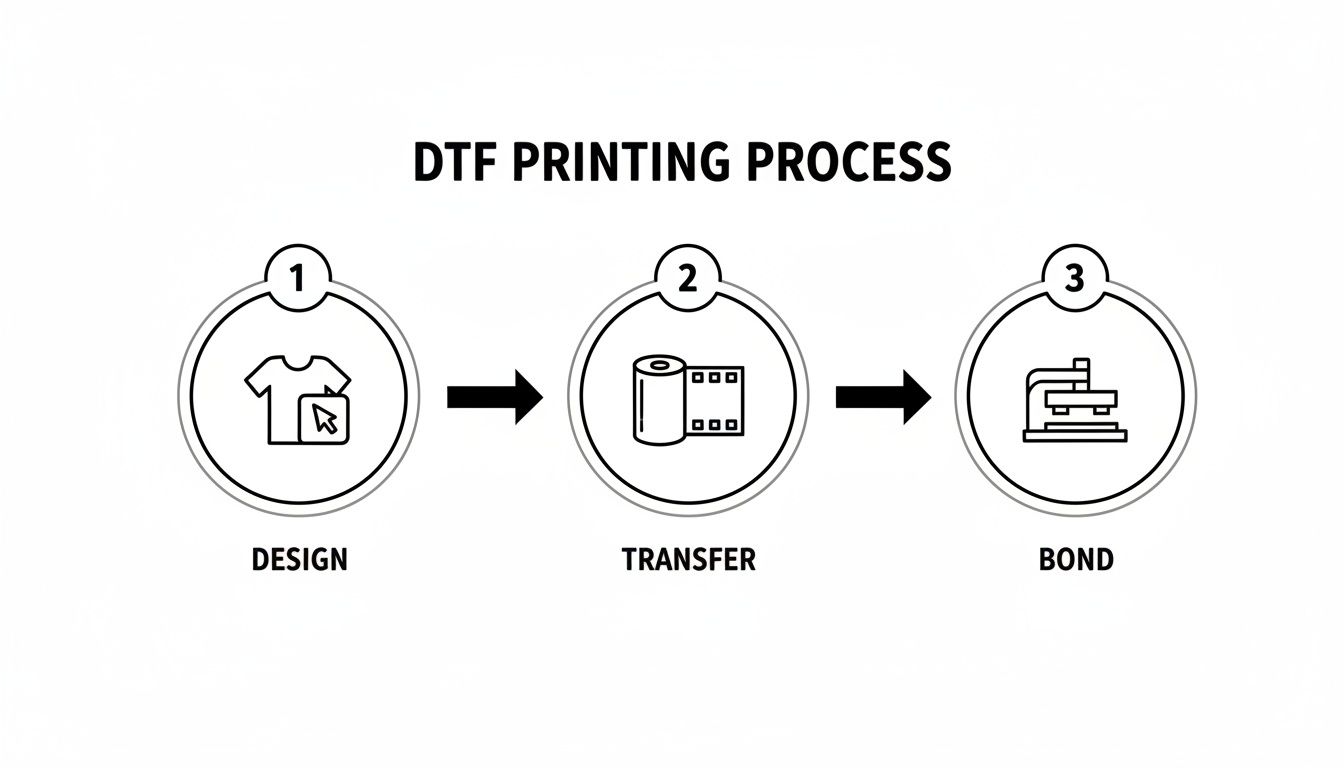
It’s this straightforward journey from screen to press that allows for such high quality every single time.
The Magic Dust: Creating The Bond
With the design printed on the film, it’s time for the secret ingredient that gives DTF prints their legendary staying power. The still-wet ink is coated with a fine thermoplastic adhesive powder. It looks like a dusting of powdered sugar, and it cleverly sticks only to the inked areas, leaving the rest of the film clean.
This powder is the key. It’s the "magic dust" that will permanently fuse the design to the fabric. The powdered film is then passed through a curing unit, which gently melts the powder into a smooth, even adhesive layer covering the back of the print.
This adhesive is what sets DTF apart. It creates an incredibly strong yet flexible bond that lets the print stretch and move with the fabric. No cracking, no peeling—just a design that can handle whatever a day in Brooklyn throws at it.
The Final Fusion: Making It Permanent
Now for the final, most satisfying step. The prepared film, with its vibrant design and melted adhesive backing, is positioned perfectly on the t-shirt. The shirt and film go into a heat press together.
The press clamps down, applying intense heat and pressure for a set amount of time. This heat fully activates the adhesive, creating a permanent bond right down to the fabric's fibers. After a few seconds, the press is opened, the garment cools for a moment, and the clear film is peeled away.
What's left behind is the crisp, colorful design, now a seamless part of the shirt. The result is a print with a smooth, soft feel, fully integrated into the fabric and ready for the streets.
Choosing The Right Print Method For Your Vision
Every Brooklyn-inspired design has a story to tell, and the right printing method is what makes people stop and listen. Figuring out how to bring your vision from a screen to a shirt is just as important as the artwork itself. It's the thin line between a tee that feels like a genuine piece of culture and one that just feels like another piece of merch. This isn't just about technical specs; it’s about matching the medium to the message.
You've got a few solid options in the world of custom apparel: Direct to Film (DTF), Direct to Garment (DTG), classic screen printing, and heat transfer vinyl (HTV). Each has its own vibe and its own strengths. Your job is to pick the one that best tells your story, whether you’re dropping a limited run for a pop-up in Williamsburg or stocking an online shop for a global audience.
Let's put it this way: if you wanted to capture the intricate, sprawling details of the DUMBO skyline—an area once known as Gairville for its massive cardboard box factories—on a dark hoodie, you'd need a method that nails precision and color vibrancy. This is where DTF printing steps up and becomes the hero.
DTF vs Direct To Garment (DTG)
On the surface, DTF and DTG seem like two sides of the same coin. Both use sophisticated inkjet technology to create stunning, full-color designs. The real difference, though, is in their approach. DTG printing applies ink directly into the fibers of the garment, almost like a high-tech version of printing on paper.
This gives the final print an incredibly soft feel because the ink literally becomes part of the fabric. It’s a fantastic choice for designs on light-colored cotton shirts. But DTG can be a bit picky about fabrics and often needs a pre-treatment, especially for dark garments, to stop the colors from getting swallowed by the fabric's dye. We get into the nitty-gritty of this in our detailed guide to Direct-to-Garment printing.
DTF, on the other hand, takes a different path. It prints the design onto a special film first, which is then heat-pressed onto the garment. This creates a durable, flexible layer that sits right on top of the fabric. The payoff? An exceptionally vibrant print on any color material—from deep blacks to bright neons—that works beautifully on a huge range of fabrics like cotton, polyester, and blends.
DTF vs Screen Printing
Screen printing is the OG of the t-shirt world. It's a time-honored craft, famous for its incredible durability and that classic, slightly raised texture you can feel. The process involves pushing ink through a stenciled screen onto the fabric, one color at a time. For simple, bold graphics with just one or two colors on a massive run of shirts, it remains the undisputed champ.
But that strength in simplicity is also its weakness. Every single color in a design requires its own custom screen, which means complex, multi-colored images can get expensive and time-consuming to set up. Screen printing is the perfect choice for a classic, one-color logo for a Brooklyn band, but it's not the right artist to paint a photorealistic mural of Coney Island.
This is where DTF’s creative freedom really shines. It handles unlimited colors and intricate gradients with no problem, all in a single pass. For artists and brands focused on highly detailed designs for smaller, more exclusive drops, direct to film printing is a much more practical and cost-effective way to go, without ever having to compromise on that visual punch.
DTF vs Heat Transfer Vinyl (HTV)
Heat Transfer Vinyl (HTV) is all about cutting designs from sheets of colored vinyl and then using a heat press to apply them to a shirt. It’s perfect for simple text, numbers, or bold, single-color shapes—think team jerseys or straightforward logo tees. You can get a super clean, sharp look, and the vinyl comes in all sorts of cool finishes like glitter, metallic, and even fuzzy flock.
While it's great for personalization, HTV gets tricky with complex, multi-layered designs. Every color has to be cut and applied separately, turning intricate artwork into a painstaking puzzle. The final print can also feel a bit thick and stiff compared to other methods.
DTF offers a much more elegant path for those detailed graphics. It delivers the entire design in one single application, giving you a cohesive print that’s far softer and more flexible than a multi-layered vinyl design could ever be.
The right print method is the one that honors your creative intent. For the rich, diverse, and detailed stories we tell, DTF printing provides the versatility and quality to do justice to Brooklyn's spirit.
Printing Method Showdown DTF vs The Classics
To really see how these methods stack up for your next project, let’s put them head-to-head. This table breaks down the unique advantages of each printing style so you can match the right tech to your design.
| Feature | DTF Printing | DTG Printing | Screen Printing | Heat Transfer Vinyl |
|---|---|---|---|---|
| Best For | Photorealistic, detailed designs on any fabric color. | Soft-feel prints on light-colored cotton. | Simple, bold graphics in large quantities. | Names, numbers, and simple, single-color logos. |
| Color Complexity | Unlimited colors and gradients in one print. | Full color, but can be less vibrant on dark fabrics. | Limited by the number of screens; costly for many colors. | Limited to available vinyl colors; requires layering. |
| Fabric Versatility | Excellent on cotton, polyester, blends, and more. | Best on 100% cotton; can struggle with synthetics. | Works well on cotton and blends. | Good on cotton and polyester. |
| Feel of Print | Smooth, flexible, and sits on top of the fabric. | Very soft, as ink soaks directly into the fabric. | A durable, slightly raised layer of ink. | Thicker feel, especially with multiple layers. |
| Ideal Order Size | Perfect for small to medium runs and one-offs. | Ideal for one-offs and small orders. | Most cost-effective for large bulk orders. | Great for one-offs and very small batches. |
Ultimately, while classic methods have their place, DTF printing opens up a world of possibilities for creators who refuse to compromise on detail, color, or fabric choice. It’s a modern solution for modern designs.
Why DTF Prints Last As Long As Brooklyn Legends
A t-shirt repping Brooklyn isn't just fabric and ink; it’s a statement. It has to hold up through crowded subway rides, sunny days in Prospect Park, and a whole lot of laundry cycles. Like the borough's most iconic spots, it has to be built to last.
The incredible staying power of a Direct-to-Film print boils down to how it's made. Instead of ink soaking directly into the fibers, the design is a unified layer of specialized ink and a powerful adhesive that bonds right onto the surface. This creates a flexible, resilient graphic that actually moves with you.
Think about the paint on the Brooklyn Bridge. It doesn't just stain the steel; it forms a protective, flexible coating that stands up to harsh weather and constant vibrations. A DTF print functions in a similar way, creating a tough yet pliable layer on your shirt that resists the stretching and pulling of everyday life.
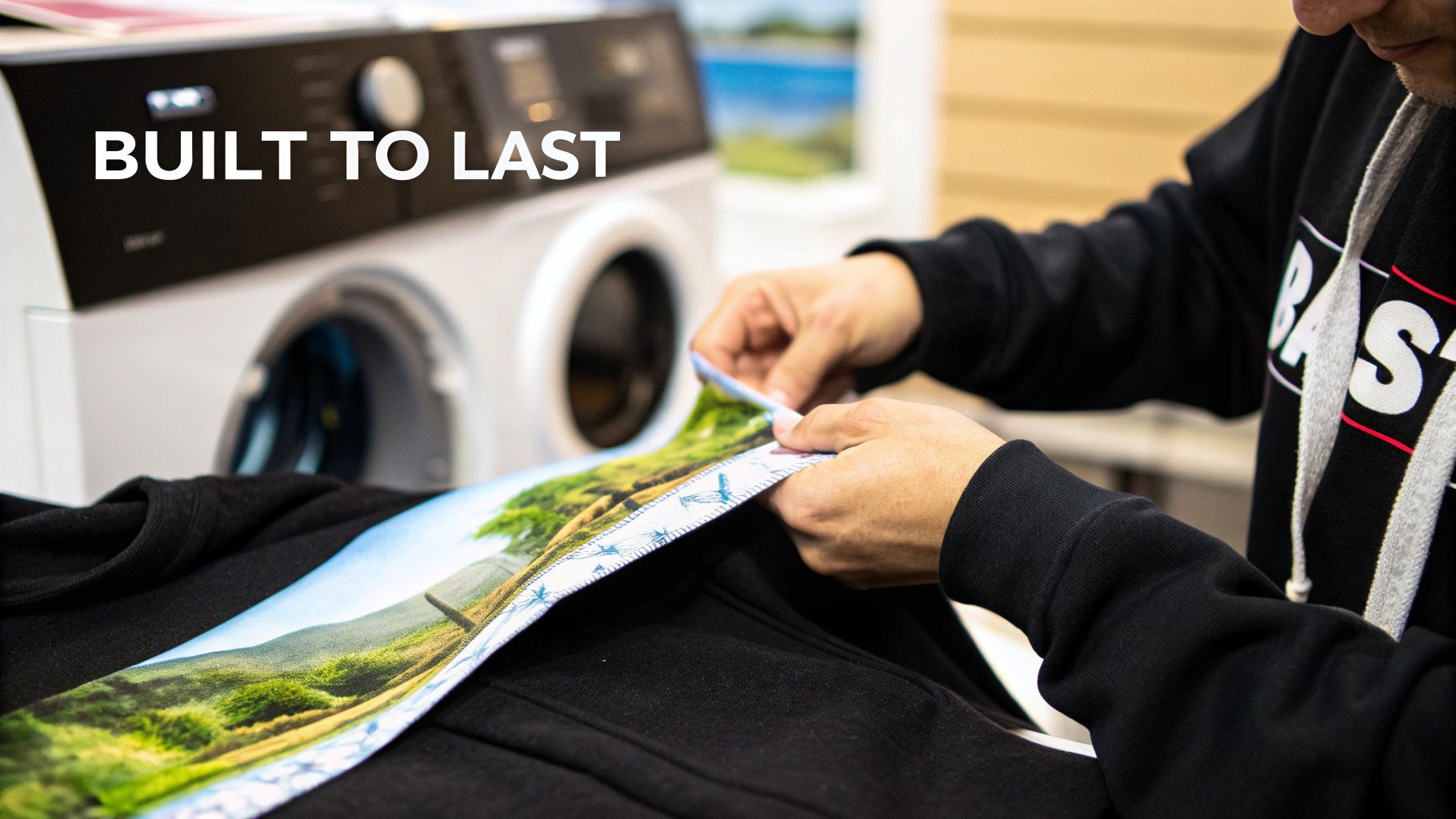
This process ensures your tee's design stays as bold and unbroken as the day you bought it, sidestepping the cracking that often plagues older print styles.
The Science Of Staying Power
So, what’s the secret behind a DTF print's resilience? It's really a smart mix of chemistry and clever engineering. The water-based inks are specifically designed for elasticity, while the thermoplastic adhesive powder creates an incredibly strong bond when heat is applied.
This fusion results in a print with exceptional wash fastness. Industry tests have shown that high-quality DTF prints can easily handle over 50 wash cycles without any major fading or breaking down. The colors stay sharp, and the details remain crisp.
The real magic is how DTF prints handle wear and tear. Because the entire design is a single, bonded layer, it stretches uniformly with the fabric. This prevents the tiny cracks that can appear in other prints, preserving the integrity of the art.
For brands celebrating Brooklyn's unbeatable culture, direct-to-film printing isn't just another piece of tech—it's the secret sauce. Data shows DTF prints have 4.5x better wash fastness than some alternatives, surviving 60 cycles with 95% color retention. This durability, paired with cost-effective small runs, is what lets a brand like The Brooklyn Initiative scale from 500-unit artist collabs to 5,000 without a drop in quality. You can dive deeper into the market trends driving this technology to see why it's catching on.
Making Your Brooklyn Tee A Legend
While DTF prints are definitely built tough, a little bit of care can go a long way in turning your favorite shirt into a true wardrobe legend. It’s actually pretty simple to keep that fresh-from-the-press vibrancy.
Following these steps will make sure your shirt—and the story it tells—lasts for years:
- Wash Inside Out: Always turn your tee inside out before washing. This simple step protects the print from rubbing against other clothes and the inside of the machine.
- Use Cold Water: Hot water is tough on fabrics and prints. A cold wash on a gentle cycle is all you need to get it clean while keeping the colors bright.
- Choose a Mild Detergent: Stay away from bleach or harsh detergents. A gentle, color-safe soap will do the job perfectly without harming the design.
- Air Dry When Possible: While you can tumble dry on a low setting, hanging your shirt to air dry is the best way to maintain its shape and the print’s integrity.
These simple habits will protect your investment and keep your Brooklyn story looking sharp. For a more detailed guide, you should check out our walkthrough on how to properly wash graphic tees to get the most out of them. When you treat your apparel right, a shirt celebrating a Brooklyn icon becomes a legendary part of your own collection.
Unlocking Creative Freedom For Brooklyn-Inspired Designs
True creativity doesn't wait for permission. And for a place as electric as Brooklyn, your ideas demand a medium that can keep up. That’s where Direct-to-Film printing comes in—it completely shatters the old artistic barriers that used to stand between a brilliant concept and the perfect piece of apparel. It’s the technology that finally matches the borough's boundless imagination.
This is where the conversation turns from technical jargon to pure possibility. DTF isn’t just for t-shirts; it’s a key that unlocks a whole new world of wearable art. It gives creators the power to tell their stories across a huge canvas of materials, mirroring the diverse textures of Brooklyn itself.
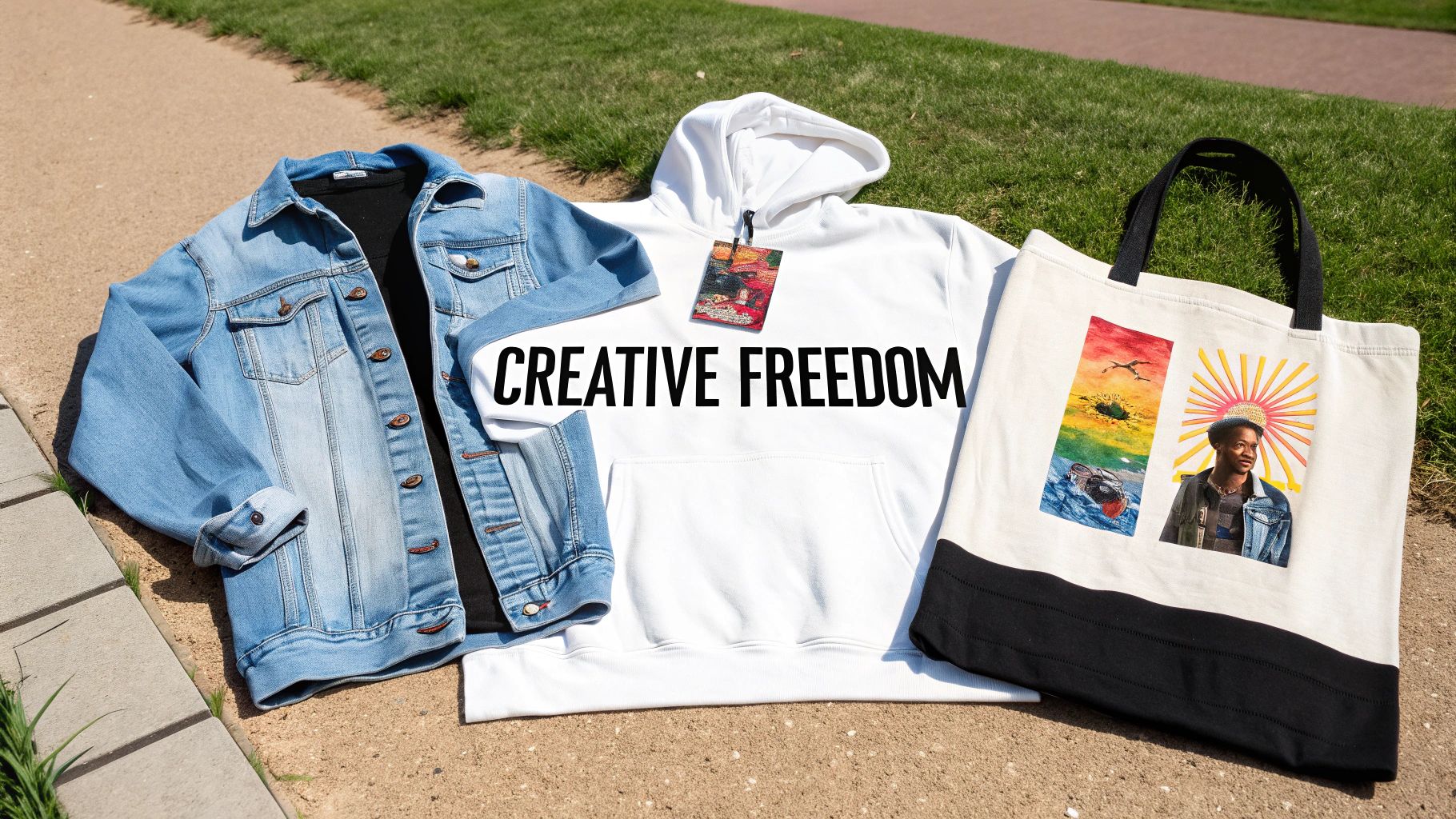
This incredible versatility means your design can live just as vibrantly on a classic cotton tee as it can on a sleek polyester hoodie, a rugged denim jacket, or a tough canvas tote. No more compromises or "what-ifs." Just pure, undiluted creative expression.
From Sunset Gradients to Graffiti Layers
Brooklyn’s art scene isn't simple. It’s layered, complex, and full of nuance. Just think about the subtle, shifting colors of a sunset over the Williamsburg Bridge or the intricate, overlapping tags in a Bushwick graffiti alley. Capturing that kind of detail is where DTF printing truly shows its strength.
The technology is built to reproduce designs with an unlimited color palette and stunning, photorealistic quality. It doesn't just get "close" to your colors; it nails them, exactly as you intended.
Here’s what that means for your designs:
- Flawless Gradients: Those smooth, seamless transitions between colors? They’re preserved perfectly, capturing the depth and emotion of your original artwork.
- Photographic Precision: High-resolution photos can be transferred with breathtaking clarity, turning a garment into a wearable snapshot of Brooklyn life.
- Intricate Details: The finest lines, the smallest text, and the most complex patterns come out razor-sharp. No part of your vision gets lost in translation.
This isn’t just a cool feature; it’s a game-changer for apparel design. It gives you the freedom to be artistically ambitious in a way that just wasn't possible before, transforming clothing into a legitimate canvas for high-art.
DTF printing closes the gap between digital art and a physical product. It ensures that the soul of a design—its color, its detail, its energy—is translated perfectly onto the fabric, honoring the creator’s vision without compromise.
This is the tech that lets us bottle the true spirit of Brooklyn, a place defined by its artistic fearlessness. It empowers local artists to see their most ambitious work come to life on apparel, reaching new audiences and turning their creativity into something you can hold, wear, and share.
Bringing Ambitious Visions To Life
Ultimately, it all comes back to a single mission: creating unique apparel that serves as a genuine reflection of Brooklyn’s one-of-a-kind culture. This isn't about churning out mass-produced souvenirs. It's about crafting limited-edition pieces that carry a story, a perspective, and a piece of the borough's heart.
DTF makes this possible on a practical level. It frees designers from the old constraints of fabric types and color counts, opening the door for bolder, more experimental concepts. A design inspired by the weathered brick of a Brownstone or the vibrant chaos of a street fair can now be brought to life with total fidelity.
This is the freedom that allows a brand like The Brooklyn Initiative to team up with local artists, translating their unique styles into wearable pieces that resonate with people who love this borough. Whether it’s a tribute to an iconic landmark or a subtle nod to an inside joke only a true Brooklynite would get, DTF provides the tools to do it right. It’s about so much more than printing a logo on a shirt; it’s about infusing a garment with the very essence of a place.
Your Questions About DTF Printing Answered
Diving into the world of custom apparel, especially for a place with as much character as Brooklyn, always sparks a few questions. Did you know Brooklyn has its own official color, Brooklyn Gold, created by Pantone? Understanding the details matters here. It's one thing to hear about a new printing method, but it’s another to really understand how it feels, how it holds up, and what it truly makes possible.
Think of this as a quick chat with a local print expert. No jargon, no fluff. We're pulling back the curtain to answer the questions we hear most often, so you can feel confident and see why DTF is the perfect match for telling Brooklyn's stories through wearable art.
How Does a DTF Print Feel Compared To Screen Printing?
This is usually the first thing people ask, and for good reason—the feel of a shirt is everything. A DTF print is incredibly smooth and flexible. Unlike some screen prints that use thick inks that sink into the fabric and can feel a bit heavy or stiff, a DTF transfer bonds cleanly right on top of the material.
The result is a finish that feels like a very thin, soft layer that moves with you. It's worlds away from those old-school, plastic-like heat transfers you might remember. This modern method is engineered to stretch with the fabric, meaning it won’t crack or peel. For our tees, this means you get a design that’s bold and full of detail without ever sacrificing the comfort of the shirt itself. It’s the best of both worlds: a huge visual punch without the bulk.
Is DTF Printing An Eco-Friendly Choice For Apparel?
In a community as forward-thinking as Brooklyn, how something is made matters just as much as how it looks. We’re happy to say that DTF printing stands out as a more environmentally conscious choice compared to many older methods. The entire technology is designed from the ground up to be more efficient.
The process is built around water-based inks, which are far kinder to the environment than the plastisol inks often used in screen printing. This also means cleanup requires fewer harsh chemicals. Best of all, DTF is incredibly precise. The design is printed exactly as needed on the film before being transferred, which means there's almost no ink waste.
DTF printing is a more sustainable option, consuming significantly less water and energy than many traditional apparel decoration techniques. This aligns perfectly with our commitment to creating products that not only celebrate Brooklyn but also respect our shared environment.
Can You Print Full-Color Photos On T-Shirts With DTF?
Absolutely. In fact, this is where DTF technology truly shines and leaves other methods in the dust. It excels at reproducing high-resolution, full-color images—including detailed photographs—with breathtaking clarity. The process handles an unlimited color palette without any extra setup costs or complexity.
This is a massive advantage over something like screen printing, which gets complicated and expensive when you’re trying to replicate photos with tons of shades and gradients. With DTF, every subtle hue and tiny detail is captured perfectly. It’s the ideal technology for bringing iconic Brooklyn scenes to life, from historic landmarks to candid street photography that captures the borough's soul. It unlocks a level of artistry that was once incredibly difficult to achieve on fabric.
How Should I Care For My DTF Printed T-Shirt?
A shirt that tells a Brooklyn story deserves to last. To keep your tee looking as vibrant as the day you got it, a few simple care steps will go a long way. Think of it as protecting a piece of wearable art.
Just follow these guidelines, and you’ll protect the print’s integrity for years to come:
- Turn It Inside Out: Before it goes in the wash, always turn the garment inside out. This is the single best way to protect the design from rubbing against other clothes.
- Wash Cold, Gentle Cycle: Use cold water to prevent fading and choose a gentle cycle. It’s less abrasive on both the fabric and the print.
- Use a Mild Detergent: Stay away from bleach or harsh detergents. A simple, mild soap is all you need to get it clean without causing damage.
- Hang Dry If Possible: You can tumble dry on low, but air drying is the champion. Hanging it up prevents any potential heat damage and helps the shirt keep its shape.
- Never Iron the Design: If you need to iron the shirt, make sure it’s still inside out and use a low heat setting. Never, ever press the iron directly over the printed area.
Follow these tips, and your shirt will remain a legendary part of your wardrobe, ready for whatever the city throws your way.
Ready to wear a piece of Brooklyn's story? Every design at The Brooklyn Initiative is a tribute to the borough's culture, brought to life with the incredible detail and durability of DTF printing. Find your next favorite tee and celebrate the spirit of Brooklyn today.