


The most popular budget-decorating advice is often backwards. Buying a collection of inexpensive baskets, cushions, prints, and accessories can feel frugal at the checkout, but the room may end up looking busy rather than finished. To decorate a bedroom on a budget, start with the visual change people notice first, then let practical updates support it.
A well-chosen Brooklyn canvas wall art piece can provide that anchor. It brings scale, color, and personal meaning to the room without asking you to replace the bed, dresser, or flooring. The smartest low-cost bedroom refresh isn't about buying more. It's about choosing the right sequence.
Why Most Budget Bedroom Makeovers Fail
A bedroom rarely looks expensive because it contains many objects. It looks considered because the objects relate to one another, the lighting supports the layout, and one or two elements establish a clear point of view. Scatter small purchases across every surface, and the eye has nowhere to rest.
Independent furnishing estimates place a bedroom at about $2,000 to $5,000 overall, with a primary bedroom often reaching $1,500 to $4,000 before decorative extras are added, according to HomeAdvisor's bedroom furnishing and decor cost guidance. That context matters. The bed, storage, and lighting foundation consume much of the room budget, so spending the remainder on a pile of disconnected accents rarely solves the underlying problem.
The cheap-item trap
A low price doesn't automatically make an item good value. A small print may need a frame, mat, and installation. Several decorative objects may compete with the room's existing furniture. A trend-led cushion can also force you to buy matching textiles that weren't part of the original plan.
Practical rule: Buy fewer things, but make each visible purchase support the same mood.
Paint can still be a powerful intervention, especially when the walls look tired or the existing color palette feels cold. For a useful overview of why paint can create such a fast visual shift, explore the easiest way to refresh any space. The mistake is treating paint, bedding, and accessories as separate projects instead of selecting them around one defining feature.
Start with a focal point
A statement artwork gives the room an immediate hierarchy. Brooklyn street-sign typography, subway references, neighborhood maps, or music-inspired imagery can make a bedroom feel specific rather than showroom-generic. Once that focal point is chosen, bedding can echo one color, lighting can highlight the wall, and smaller accessories can remain quiet.
This approach also protects your budget from the largest temptation, replacing furniture that still works. A sound bed frame and serviceable dresser don't need to disappear because the room feels dull. They need a stronger visual context.
Assessing Your Space and Defining Your Style
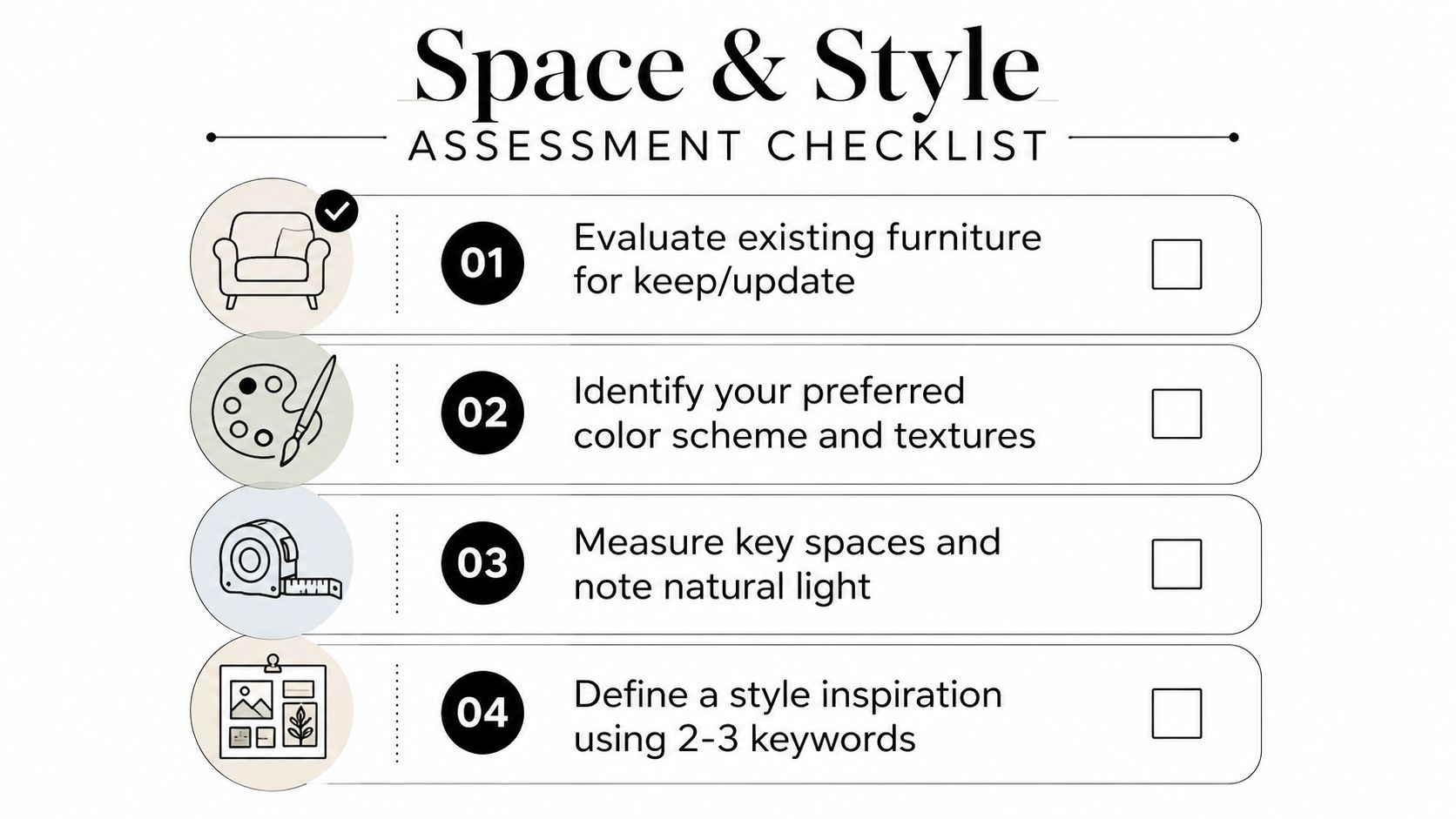
Before shopping, stand in the doorway and record what the room already gives you. Note the bed frame, nightstands, dresser, curtains, rug, lamps, wall color, and anything that can be repaired, repainted, or rearranged. A scratched nightstand may need only a new finish, while a bulky piece that blocks circulation is a layout problem, not a styling opportunity.
Measure the wall where artwork could go, the clearance above the headboard, and the floor area available for a rug. Then observe the room at different times of day. Ask whether natural light reaches the bed, whether the main wall appears shadowed, and whether a dark canvas would disappear against the existing paint.
Make the keep, update, replace decision
Use three simple categories rather than judging every item emotionally.
- Keep: Retain pieces that function well, fit the room, and can support the intended look.
- Update: Repaint, change hardware, steam, repair, or reposition pieces that are useful but visually tired.
- Replace: Reserve new spending for items that create discomfort, waste space, or undermine the rest of the layout.
Next, choose two or three style words. “Warm, graphic, urban” points toward a different Brooklyn art choice than “soft, natural, quiet.” You might prefer vintage street signs and subway motifs, or you might respond to contemporary neighborhood maps and restrained black-and-white compositions.
Let the room answer the style question
Look at the colors already present in the bedding, flooring, and curtains. If the room has warm wood and cream walls, a canvas with muted reds, ochres, or charcoal can feel integrated. If the room is pale and minimal, a bold Brooklyn-inspired piece can supply the contrast without requiring a complete repaint.
Check the wall's role before you commit. A narrow wall may suit a vertical composition, while the broad space above a bed can carry a wider statement. Define the artwork's position, palette, and visual weight first. Shopping becomes far more disciplined once you know what the room is missing.
Setting a Realistic Budget and Priority Sequence
A decorating budget fails when purchases happen in the order they appear online. A better sequence begins with the room's structure, then improves comfort, then adds the element that gives the space its identity. This order keeps attractive but low-impact items from consuming money needed for lighting or textiles.
The cost gradient becomes steep when a refresh turns into renovation. Independent pricing guidance places cosmetic or furniture-only bedroom work around $50 to $100 per square foot, while larger renovations can reach $100 to $200 or more per square foot, according to HomeAdvisor's bedroom remodeling cost guide. The same source gives an average range of about $12,100 to $14,500 for a 100-square-foot bedroom, compared with $19,400 to $25,100 for a 170-square-foot room. Those figures aren't a reason to renovate. They're a warning to keep a decorating project cosmetic if affordability is the priority.
Sequence spending by visibility
Think in four layers rather than fixed percentages. A percentage split can create false precision because every room begins with different furniture and lighting.
- Foundation: Keep the existing bed and frame if they're sturdy. Address only the foundational problem that affects comfort, storage, or circulation.
- Soft goods: Improve the bed's visual volume with a duvet, pillows, curtains, or a rug. Choose texture before novelty.
- Lighting: Add or improve bedside lighting so the room works after sunset and the focal wall doesn't sit in darkness.
- Personality: Place the remaining budget into one statement canvas, rather than distributing it across several small decorations.
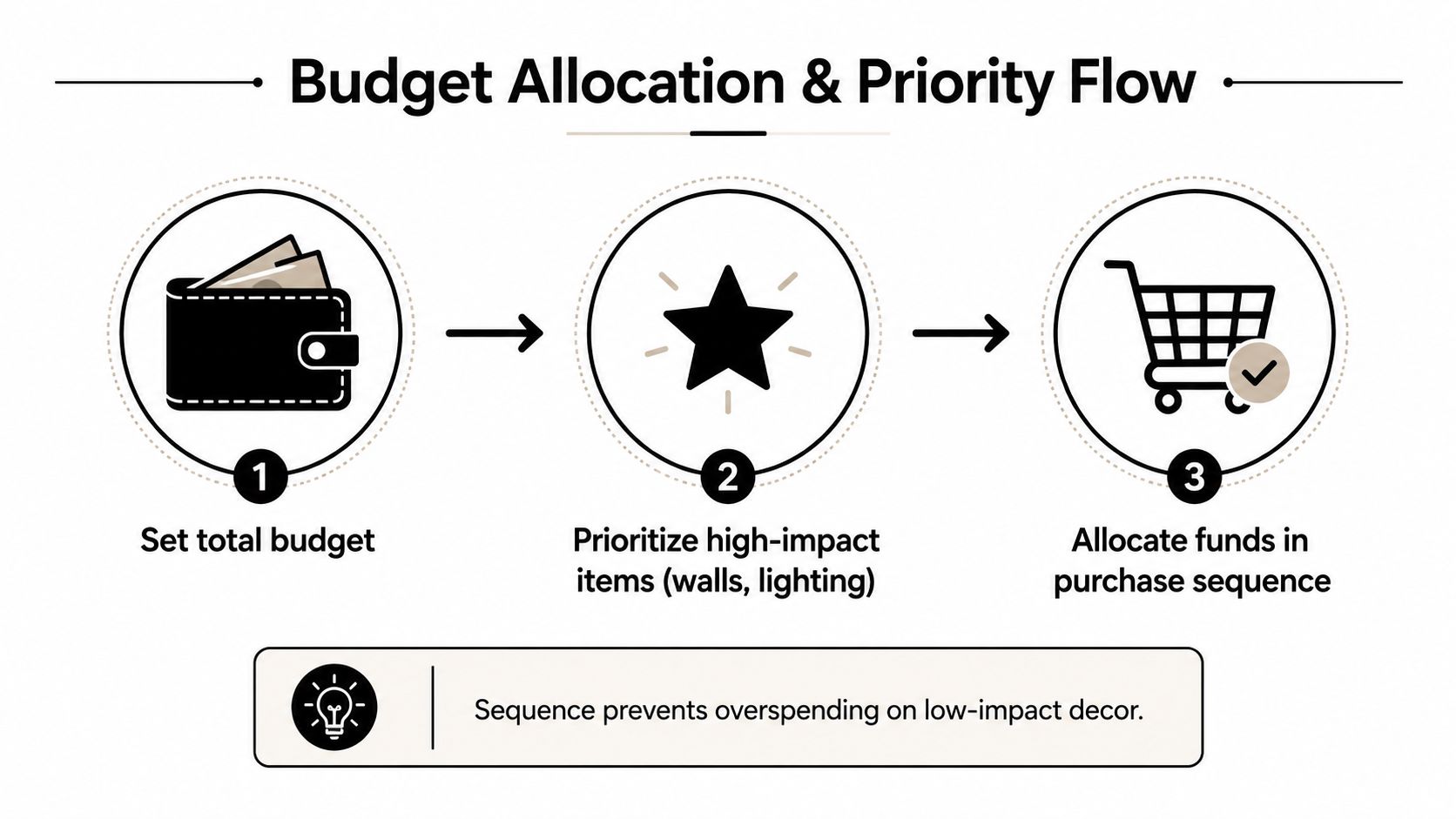
One practical bedroom makeover breakdown places the budget at $1,200 to $2,500, covering paint, a duvet and pillows, blackout curtains, two bedside lamps, and a rug, while keeping the existing bed and frame, as explained in this bedroom makeover cost breakdown. That logic is sound even when your available spend is lower. Protect the pieces that change the room's perceived quality, and avoid replacing furniture to create novelty.
For bedding-specific ideas that keep the update focused, this guide to a simple low-cost bedroom update can help you compare soft-goods changes before buying decorative extras. The winning sequence is the one that leaves the room functional, comfortable, and visually complete, not the one that fills the largest number of shopping bags.
Choosing Statement Wall Art That Anchors the Room
A strong canvas can do the work of several minor accessories because it occupies meaningful visual space. It introduces color at eye level, establishes a theme, and gives the rest of the bedroom a reference point. That's why ready-to-hang Brooklyn wall art is such a useful budget strategy.
Framed canvases are generally sold assembled with hanging hardware, which removes the need to purchase a separate frame or manage a complicated installation, as described in this comparison of framed and unframed canvas art. That practical detail changes the total cost and the effort involved. You can choose the art first, place it correctly, and avoid discovering later that framing has become a second project.
Choose meaning over generic coordination
Brooklyn offers a rich visual vocabulary. A vintage street sign can suit a room with industrial details. A subway-inspired composition can add graphic energy to plain bedding. A neighborhood map may appeal to someone who wants the bedroom to reflect a particular memory, while musical references can bring warmth and rhythm to a quieter scheme.
Brooklyn is home to more than 600 cultural groups and businesses, and 26% of Brooklyn's professional artists are immigrants, according to Brooklyn's arts and culture overview. The borough's identity isn't one visual style. Its streets, languages, music, foodways, and communities provide many legitimate starting points for art that feels personal rather than mass-produced.
The Brooklyn Arts Council's Cultural Heritage program also describes living heritage through forms such as folk song, storytelling, social dance, foodways, and material culture. That broader perspective helps you choose artwork for its story, not just its color match.
Get scale and placement right
Place the center of the composition at a comfortable viewing height, while adjusting for the bed and headboard. Leave enough breathing room around the canvas so it doesn't look squeezed against the ceiling, adjacent furniture, or wall corners. In a small room, one appropriately scaled artwork usually creates more order than a scattered gallery wall.
Limited-edition positioning can add a sense of distinction because scarcity, artist importance, subject recognition, production quality, condition, provenance, and collector demand can all shape perceived art value, as outlined by Sotheby's guide to limited-edition art. That doesn't mean every limited run is automatically valuable. It means a clearly defined release can feel more intentional than an interchangeable mass-produced print.
For a deeper look at selecting Brooklyn-inspired pieces, use this guide to Brooklyn wall art. Keep nearby accessories restrained. Even a few carefully chosen plants, including beautiful indoor cactus varieties, should support the artwork rather than create a competing display.

Layout and Styling Techniques for Maximum Impact
Begin with the bed because it controls movement through most bedrooms. Keep the clearest walking route open, center the bed on its strongest wall when possible, and position the Brooklyn canvas where it can be seen from the doorway. This creates a deliberate arrival point without buying another major piece.
Build balance around the artwork
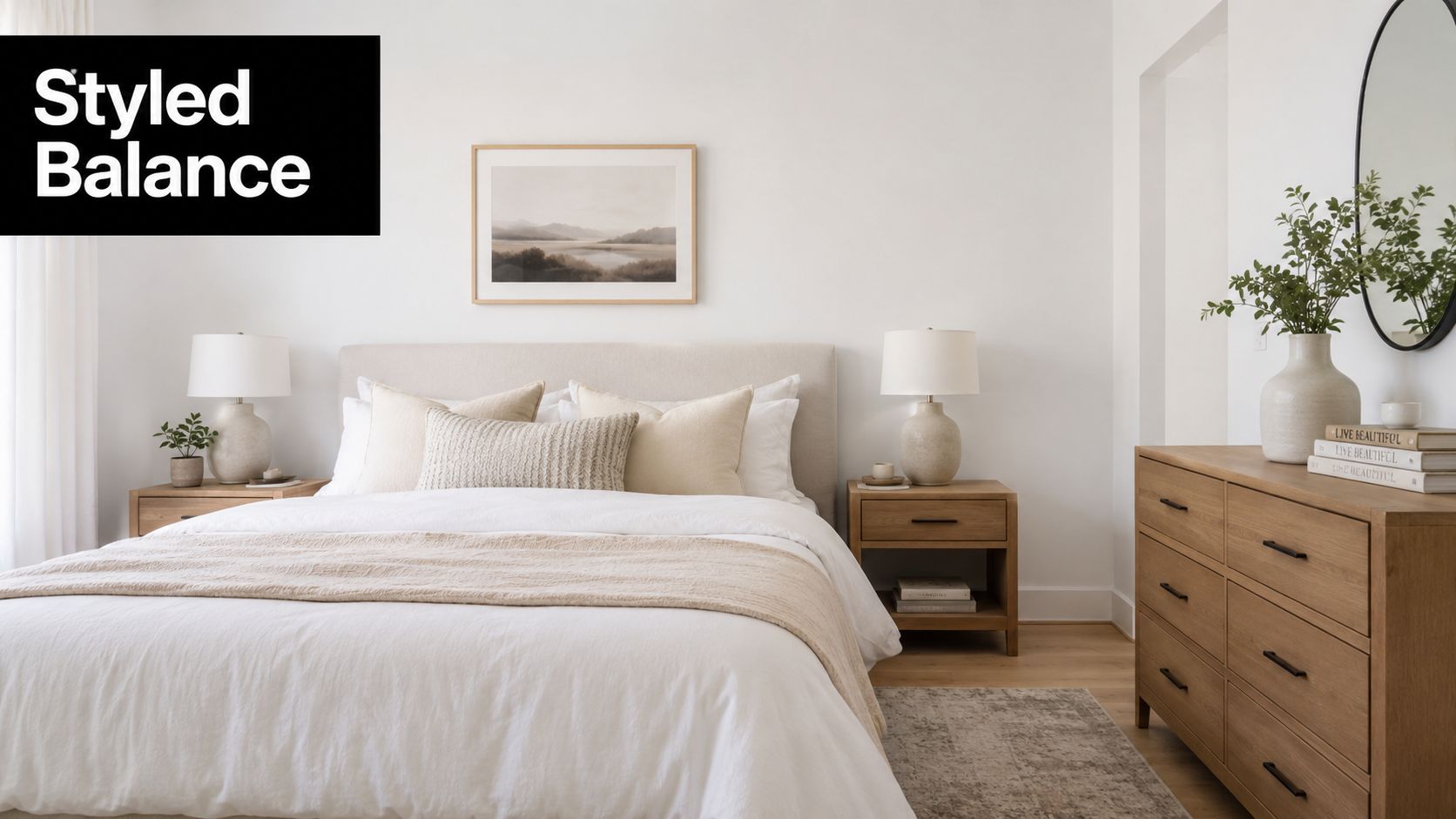
Balance doesn't require identical objects on each side of the bed. A lamp can counter the visual weight of a dark canvas, while a low dresser or plant can balance a tall composition elsewhere in the room. Keep the largest patterns on the bed or wall, then use quieter textures on the remaining surfaces.
Layer the bed with one dominant textile, one contrasting texture, and a small number of pillows. A cotton duvet, knitted throw, and linen cushion can create depth without relying on multiple colors. Repeat one art color in a pillow, lamp shade, or small object, but don't match every item exactly.
Lighting decides whether the focal point works at night. Use bedside lamps for reading and add a directional or ambient source that gives the artwork a gentle wash. In a small bedroom, wall-mounted storage and vertical lighting preserve floor space. In a dim room, warm bulbs, pale bedding, and reflective surfaces can keep the composition from feeling heavy.
For placement guidance, refer to this practical guide on how to hang art. The exact hardware depends on the wall and the canvas weight, but the visual principle remains consistent: hang the work securely, give it room to breathe, and avoid placing it where doors or curtains will interrupt the composition.
A quick visual review can expose problems before you buy anything else. Stand outside the room, switch on the evening lighting, and ask whether your eye lands on the artwork first, whether the bed still feels inviting, and whether any surface looks overcrowded. This walkthrough offers another way to study the relationship between layout, light, and focal points:
Making Budget Decor Work for Renters and Small Spaces
A renter's bedroom needs personality without permanent commitment. Peel-and-stick wallpaper, removable decals, wall-mounted storage, and layered lighting are useful because they can be changed or removed, while warm neutrals, textured walls, and one statement artwork can create atmosphere without covering every surface, as discussed in this low-budget bedroom trend guide.
Consider a studio apartment where the bed sits close to the living area. A single Brooklyn canvas can define the sleeping zone without a bulky divider. Keep the bedding calm, use a slim bedside surface, and let the artwork mark the boundary between rest and activity.
In a shared bedroom, each person can choose a meaningful small object while the main wall remains visually controlled. In a temporary room, a ready-to-hang canvas offers a portable focal point that can move with you instead of becoming tied to one lease. Lightweight storage, vertical lighting, and reversible wall treatments preserve precious floor area.
Brooklyn culture can also guide the search for distinctive secondhand accents. Browse Brooklyn thrift shops for a small wood stool, a vintage vessel, or a useful lamp, but buy only what fills a defined gap. The goal isn't to make a rental look permanently renovated. It's to make the room feel like yours while keeping the next move simple.
The Brooklyn Initiative offers limited-edition, gallery-wrapped Brooklyn canvas wall art inspired by the borough's streetscapes, typography, music, and cultural heritage, delivered ready to hang. Visit The Brooklyn Initiative to find a focal piece that can give your budget bedroom instant personality without the added cost and work of separate framing.