


Streetwear isn't just about the clothes on your back; it’s a story you wear, a message you send without saying a word. Think of it as raw, unfiltered self-expression stitched into fabric, born from the creative energy of city streets—and nowhere does that energy buzz quite like it does in Brooklyn.
Brooklyn and the Soul of Streetwear
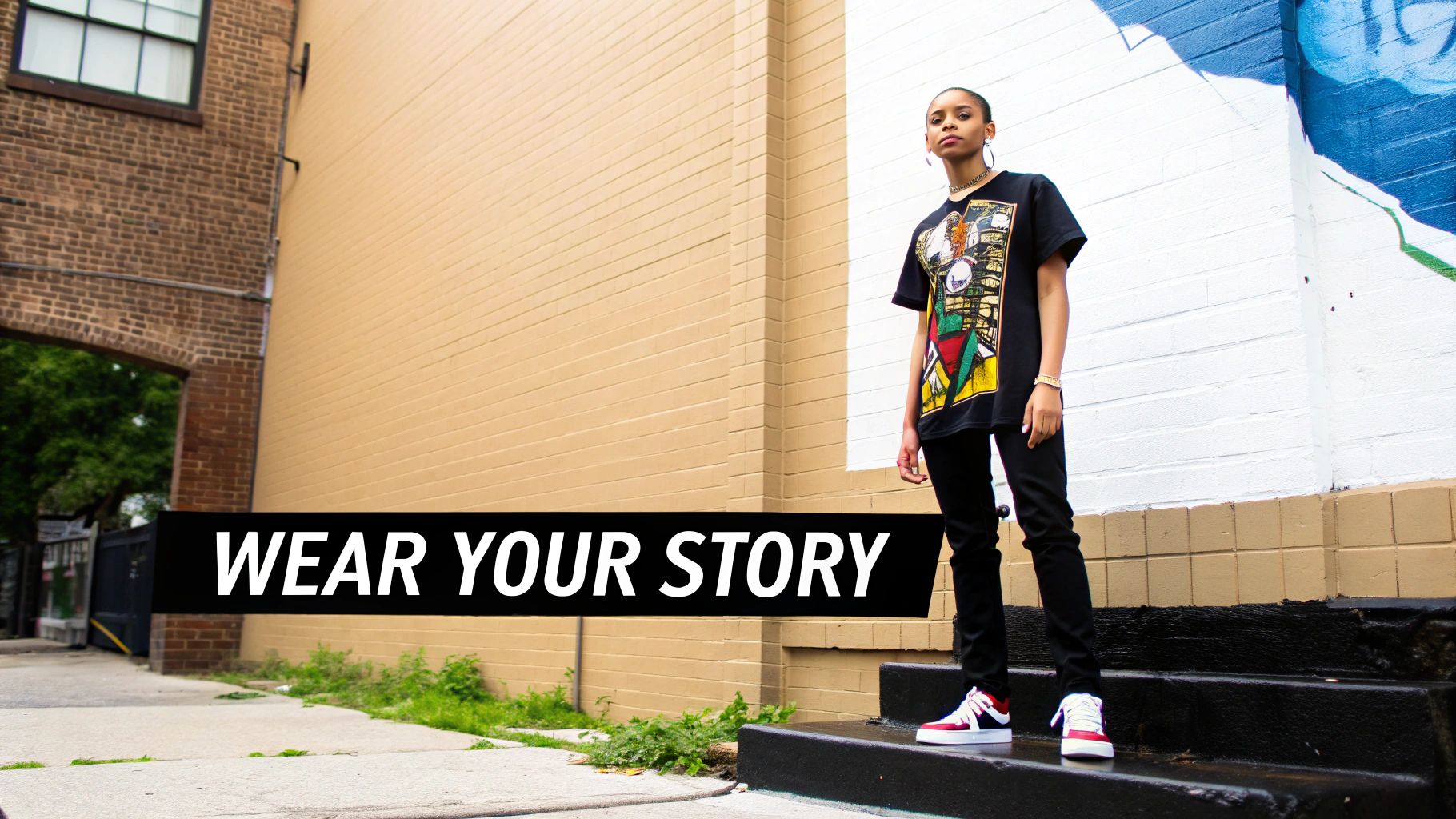
To really get what streetwear is, you have to look past the threads and see the culture woven into them. It’s wearable art, a quiet rebellion against the cookie-cutter trends coming out of high-fashion houses. It was born in communities bonded by music, art, and an independent, do-it-yourself spirit. It’s a language you'll hear spoken on sidewalks, in skateparks, and at underground shows.
Nowhere is this truer than in Brooklyn. Here, creativity isn't just a pastime; it's the borough's very lifeblood. From the invention of the teddy bear in a Bed-Stuy candy shop to becoming the birthplace of musical pioneers like Jay-Z and The Notorious B.I.G., Brooklyn has always been a hub of unexpected, world-changing innovation. This culture is a one-of-a-kind mosaic, a mashup of countless influences that creates something entirely new.
The Creative Pulse of the Borough
Brooklyn's story is one of resilience and reinvention. It's a place where Jean-Michel Basquiat developed his iconic SAMO© tag on the streets long before the art world knew his name. The borough has always been a haven for people who dare to be different, a tradition that continues with the vibrant street art of the Bushwick Collective today. This relentless creative energy is the engine behind its unmistakable style.
Streetwear in Brooklyn isn't about chasing trends. It’s about repping your block, your passions, and your own unique journey.
Streetwear is the ultimate form of personal branding. It’s a declaration of identity, a badge of honor that says, "This is who I am, and this is where I’m from."
This philosophy elevates a simple graphic tee or a hoodie into something much more meaningful. It becomes a canvas for a neighborhood’s identity, a single frame in a much larger cultural film.
The Four Pillars of Streetwear Identity
Streetwear stands on a foundation of four key cultural pillars. It’s this blend of influences that makes it so much more than just a fashion trend—it's a living, breathing movement. The table below breaks down these core components.
| Pillar | Description | Brooklyn Connection Example |
|---|---|---|
| Community | Built around shared interests like music, skating, or art, creating a sense of belonging. | The Notorious B.I.G.'s lyrics creating a shared identity for anyone from Bed-Stuy. |
| Authenticity | Prioritizes genuine self-expression and staying true to one's roots over mainstream acceptance. | A local Bushwick artist screen-printing their designs on tees to sell at a pop-up. |
| Exclusivity | Limited-edition drops and collaborations create hype and a "you had to be there" mentality. | A Dumbo-based brand releasing a 100-piece, numbered collection inspired by the Brooklyn Bridge. |
| Artistic Voice | Uses apparel as a medium for social commentary, visual art, and personal storytelling. | A graphic tee featuring protest art seen on the streets of Williamsburg. |
These pillars show how a simple piece of clothing can carry the weight of an entire culture, telling a story that connects the wearer to a larger world.
More Than a Style, A Community
Ultimately, streetwear is about finding your tribe. It connects people who see the world the same way, whether it's through a shared love for an artist, a passion for skateboarding, or just deep pride in their hometown. This sense of community is what gives the clothes their real power.
- Music: The beats of hip-hop and the chords of indie rock are its unofficial soundtrack.
- Art: Graffiti murals and gallery shows provide the visual language, splashing color and meaning onto fabric.
- Individuality: A fierce DIY attitude champions personal creativity over just following the crowd.
In the end, streetwear is a conversation between you and your world. It’s your chance to participate in a culture, not just buy into it. This guide is your invitation to understand that story, to look beyond the logo and discover a world of authentic self-expression.
From Brooklyn Sidewalks to Global Runways
If you want to get to the heart of streetwear, you can forget the glossy Parisian ateliers. You need to go back in time, back to the sun-baked pavement and echoing subways of New York City in the 1980s. This wasn't some trend dictated from on high; it was a revolution that exploded from the ground up, fueled by the raw, unapologetic energy of the city itself.
Just picture it. Boomboxes blasting the first beats of hip-hop in the Bronx. Skaters carving new lines through the concrete canyons of downtown Manhattan. Graffiti artists turning brick walls into vibrant manifestos. These scenes weren't happening in isolation—they were all crashing into each other, a beautiful collision of art, music, and attitude that created a whole new way of dressing.
The Original DIY Movement
Streetwear's origin story is all about pure, unfiltered creativity. Back in the late '80s and early '90s, you had pioneers like Harlem’s Dapper Dan who became legends not for following the rules of fashion, but for completely rewriting them. He famously remixed luxury brand logos, turning them into custom masterpieces for the biggest hip-hop stars of the day. He crafted a look that was both aspirational and deeply rooted in the culture of the streets.
That DIY spirit was the movement's heartbeat. It wasn't about going out and buying a look off the rack; it was about making one. Kids were screen-printing their own tees, customizing their jackets, and treating their clothes like a personal canvas. This is the direct ancestor of the Brooklyn culture we celebrate today, where authenticity is everything.
Streetwear began as the antithesis of high fashion. It was a declaration that style didn't belong to the elite—it belonged to the streets, to the kids who were living and breathing the culture every single day.
This core idea—that your clothes tell your story—is what took streetwear from a local vibe to a global force. It was real. It was honest. And it finally gave a voice to communities that the mainstream fashion world had ignored for far too long.
Brooklyn: The Unsung Hero
While so many scenes across NYC played a part, Brooklyn's unique creative energy was a powerful incubator for this new style. The borough has always been a haven for artists, musicians, and dreamers—the kind of people who aren't afraid to forge their own path. Did you know the iconic "Domino Sugar" sign in Williamsburg was once the largest sign in the world? That kind of bold, unapologetic expression is pure Brooklyn.
From the iconic style of The Notorious B.I.G. repping Bed-Stuy to the skate crews popping up in Williamsburg, Brooklyn provided the perfect soil for streetwear's central ideas to take root. The borough’s fiercely independent spirit—a place that was its own city until 1898—and its embrace of subcultures created an environment where creativity could run wild without compromise.
The DNA of streetwear is woven from a few key cultural threads:
- Hip-Hop Culture: This brought the soundtrack, the swagger, and the aspirational cool. It turned everyday items like sneakers and tracksuits into symbols of status and identity.
- Skate Culture: This injected a laid-back, anti-establishment attitude. It was all about comfort, durability, and a distinct graphic language that spoke volumes.
- Graffiti and Street Art: This gave streetwear its visual punch—the bold typography, the vibrant colors, and the rebellious spirit that translated perfectly onto a graphic tee.
This fusion created something that was so much more than just clothing; it was a uniform for a new generation. It stood for a shared set of values, a common language understood by anyone who was in the know. The legacy of these pioneers is still going strong, and you can see it in the modern wave of independent streetwear brands keeping that original spirit alive. This journey, from a neighborhood hustle to a worldwide movement, just goes to show how powerful an authentic idea can be when it comes from a place with a real story to tell—a place like Brooklyn.
Decoding The Essential Elements Of Streetwear
If you want to truly get what streetwear is all about, you have to stop seeing clothes as just clothes. Think of it as a uniform, a complete story you're telling the world. And at the very heart of that story? The graphic tee.
In our world, a t-shirt is never just a shirt. It’s your personal billboard. It's a wearable manifesto that shouts out your tribe, your passions, and where you come from. It’s the foundational layer of who you are.
This is especially true here in Brooklyn, where a tee can rep a neighborhood, a local artist, or a shared memory that only other locals will get. From this one core piece, the rest of the uniform gets built, with every single item chosen to craft an authentic identity. Each element is a piece of a puzzle that, when you put it all together, tells a story that’s uniquely yours.
The Graphic Tee As Your Canvas
The graphic tee is the soul of streetwear. It’s the most direct, powerful way to get your point across without ever saying a word. Think of it as a modern-day protest sign or a band poster, worn right on your chest.
In a place like Brooklyn, where art is literally sprayed on the walls, the graphic tee becomes a mobile mural. A design might have a stylized map of Bushwick, a nod to the iconic Cyclone rollercoaster in Coney Island, or a lyric from a legendary Bed-Stuy rapper. It turns a simple piece of clothing into a piece of local lore, connecting you instantly to a community.
The graphic tee is the ultimate conversation starter in streetwear. It’s an invitation for others to understand what you stand for, where you’ve been, and what culture you represent.
This is the most personal piece in your streetwear arsenal. It's where your story begins, and it sets the tone for everything else you put on.
The image below really breaks down how different cultural movements collided to give streetwear its powerful visual language.
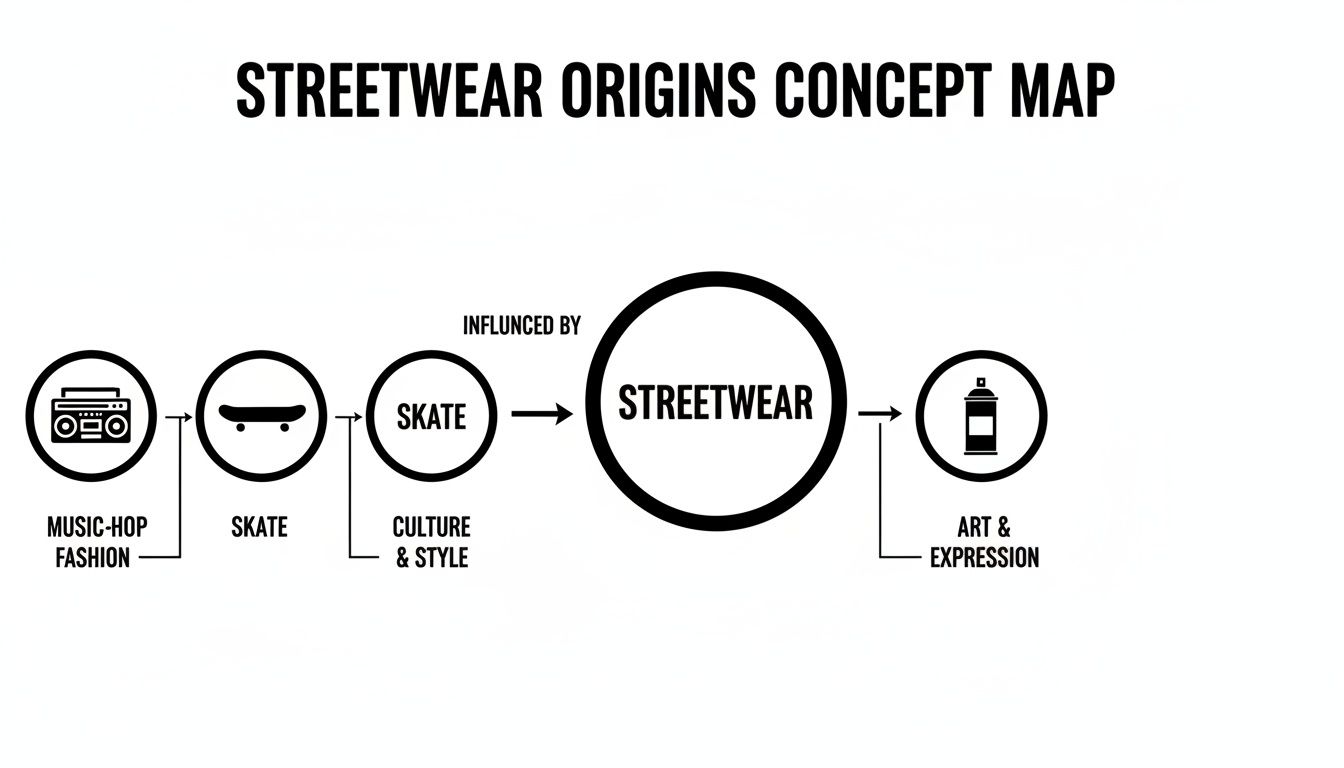
As you can see, streetwear wasn't born from a single idea. It’s a powerful fusion of art, music, and movement that continues to inspire its core elements today.
The Supporting Cast Of Icons
While the tee tells the main story, the other essential pieces are what give it context and complete the narrative. Each one has its own cultural job to do, a reason for existing that goes way beyond just looking cool.
-
The Hoodie: It's not just about comfort; the hoodie gives you a sense of urban anonymity, a shield. Putting the hood up creates a personal space in a crowded city, a subtle barrier for quiet observation. In Brooklyn, it’s the go-to armor for navigating bustling streets, whether you’re on the windy DUMBO waterfront or a late-night train ride.
-
Sneakers (Kicks): Sneakers are your foundation—your connection to the concrete. They're status symbols, collector's items, and practical gear all rolled into one. Sneaker culture is a whole world on its own, with drops and collabs creating a real sense of community and hype. The right pair of kicks instantly proves you know the culture and grounds your entire look.
-
Denim & Outerwear: These are the supporting layers, like raw denim or a classic coach jacket, chosen for being tough and timeless. They’re built to handle city life and, like Brooklyn itself, they only get better with age. Every fade and crease tells a story of where you've been.
-
Accessories: This is the final, personal signature. A beanie, a distinct cap, or a unique piece of jewelry is what finishes your story. These smaller items are often where your individuality really comes through, letting you add a detail that makes the look entirely your own.
Putting these pieces together is an art form. It's about finding that perfect balance between statement pieces and timeless essentials, all while staying true to the authentic spirit of the streets. Every choice you make, from the tee on your back to the laces on your sneakers, adds to the powerful, personal statement that is streetwear.
The Billion Dollar Industry Built On Authenticity
Ever wonder how a culture born on gritty sidewalks, spray-painted walls, and makeshift skate ramps exploded into a global financial powerhouse? The story of streetwear’s rise isn't just about fashion; it’s one of the most incredible stories in modern business. It’s living proof that authenticity isn't just a nice idea—it’s a currency all its own.
This wasn't some calculated plan cooked up in a corporate boardroom. It was the natural, unstoppable result of a culture so real and so powerful that the world had no choice but to pay attention. Streetwear's financial success comes from a massive shift in what people actually want. We all got tired of being told what to wear by distant, disconnected fashion houses. We started craving connection, identity, and a story we could actually see ourselves in.
From Niche to Juggernaut
What started as a scrappy counter-culture movement in the 1980s and 1990s has now become a dominant force. As of 2025, the global streetwear market is valued at a mind-blowing $206.4 billion to $371.09 billion, depending on who you ask. That accounts for roughly 10% of the entire global apparel and footwear market. This wild trajectory shows just how deeply the authentic spirit of street culture—from hip-hop to graffiti—has connected with people everywhere. You can dive deeper into the streetwear market's explosive growth on bestcolorfulsocks.com.
This isn't just about hype. It's solid proof that when a product comes from a real community, with a genuine story behind it, its value is almost limitless. It tapped into that universal human need to belong and to show the world who we are.
The economic power of streetwear is a testament to a simple truth: authenticity sells. In a world of mass production, something real, something with a soul, is the ultimate luxury.
This is the exact principle that brands born in creative hubs like Brooklyn are built on. A limited-edition tee isn't just fabric and ink. It's a piece of a neighborhood's history, a wearable piece of a unique culture. That connection is something no mega-corporation can fake, and it's what people are excited to invest in.
The Power of Cultural Capital
Streetwear’s value isn't just counted in dollars. It's measured in cultural capital—the influence and status that comes from being seen as authentic, cool, and in the know. In the world of streetwear, that’s everything.
Brands build this capital not with massive advertising budgets, but through genuine connection.
- Community Engagement: They sponsor local skate events, host pop-ups in neighborhood galleries, or collaborate with local musicians.
- Storytelling: Every single design has a backstory. It might connect to a specific place, an artist, or a moment in time, like a nod to a famous Brooklyn landmark.
- Exclusivity: Limited drops create that "you had to be there" energy. It turns a simple purchase into a shared experience and makes every item a true collectible.
This whole approach flips the traditional fashion model on its head. Instead of a brand telling you what's cool, the community gives the brand its credibility. It’s the streets that decide what works.
The lesson here is powerful. Streetwear’s journey from the curb to the runway shows that the most potent ideas often come from the margins, not the mainstream. It’s an incredible reminder that your unique story, your local culture, and your authentic voice hold more value than you can imagine. When you stay true to where you come from, you’re not just building a brand—you’re starting a movement.
How To Style Your Story With A Brooklyn-Inspired Tee
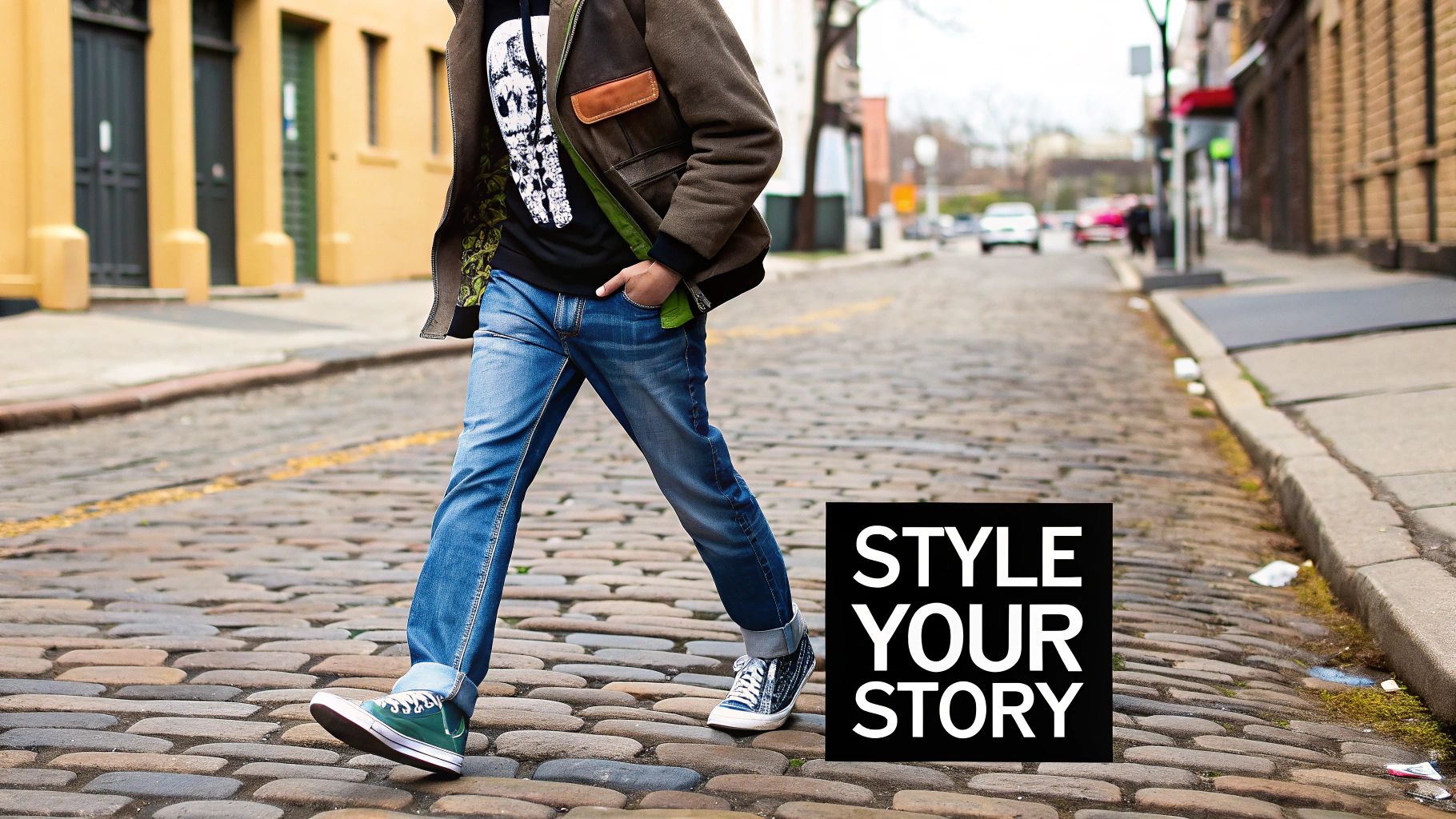
Alright, now it’s your turn. Knowing the culture is one thing, but the real magic happens when you make it your own. A Brooklyn-inspired graphic tee is more than just a piece of fabric; it’s the hero of your outfit, the key that unlocks your personal narrative. It's a living piece of what streetwear fashion is all about.
Forget rigid rules. This is about using your clothes to tell a story—your story. Let’s walk through three distinct looks, each anchored by a graphic tee, to capture a different side of Brooklyn life. Think of this as your playbook for expressing a real connection to a place, its incredible energy, and its one-of-a-kind creative spirit.
The DUMBO Creative
Picture this: cobblestone streets, the Manhattan Bridge framed perfectly between buildings, and a constant hum of artistic energy. The DUMBO Creative look is clean, sharp, and effortlessly cool. It’s all about mixing modern style with a nod to the area's industrial past—a history so rich that the entire neighborhood is a designated historic district.
Start with a graphic tee that has a minimalist, architectural design—maybe an abstract take on the Brooklyn Bridge. Subtlety is your friend here.
- Jacket: Throw on a sleek, dark-wash denim jacket or a lightweight bomber. The idea is to create a sharp silhouette that lets the tee do the talking.
- Pants: Pair it with slim-fit black or charcoal chinos. This keeps the whole look polished, perfect for a gallery opening or a client meeting at a local coffee shop.
- Sneakers: Finish it off with classic, low-profile white leather sneakers. They’re timeless, comfortable for walking those cobblestones, and add a clean pop of contrast.
This entire outfit is about intentional choices. It says you appreciate design, you get form and function, and you’re tapped into the creative pulse that makes DUMBO iconic.
The Williamsburg Artist
Now, let's head over to Williamsburg, where the vibe gets more eclectic, experimental, and unapologetically bold. The Williamsburg Artist isn’t afraid to clash patterns, mix textures, and blur eras. Their style is a collage of thrift store gems and indie finds, reflecting a neighborhood that went from an industrial hub to the heart of the indie rock scene.
This is your chance to break out a tee with a louder, more expressive graphic. Think vibrant colors, a vintage band-style print, or something that looks like it was pulled right off a local wall. For tips on rocking a looser fit, check out our guide on how to style oversized graphic tees.
- Jacket: Go for a vintage, oversized flannel shirt worn open or a distressed corduroy jacket. It’s all about adding texture and a relaxed, lived-in feel.
- Pants: Ripped, light-wash jeans or baggy cargo pants are a perfect match. This look is built on comfort and a genuine non-conformist attitude.
- Sneakers: Lace up a pair of high-top canvas sneakers like classic Chuck Taylors or something equally iconic and worn-in. They add to the story that you're always on your feet, moving from your studio to a late-night show.
The Park Slope Weekender
Finally, let’s dial into the relaxed, community-focused vibe of Park Slope. This look is all about comfort, approachability, and timeless style. It’s what you wear for a weekend stroll through Prospect Park, a trip to the farmers market, or brunch with friends on a block lined with historic Brownstones.
The tee here feels nostalgic and warm, maybe featuring a retro-inspired graphic or a simple, text-based design repping a local landmark. The colors are often more subdued and earthy. It's no wonder the global decorated apparel market, which includes these essential graphic tees, was valued at $23 billion in 2021—we all love a good story on a shirt.
Style is the narrator of your personal journey. A single tee can be a chapter, a memory, or the first line of a new adventure. The way you wear it is how you tell the world your story.
This outfit is built for pure ease and movement, reflecting the laid-back pace of the neighborhood.
- Jacket: A soft, zip-up hoodie or a classic, neutral-toned utility jacket is the ideal top layer. It's practical and will never go out of style.
- Pants: Comfortable, well-fitting dark denim jeans create the foundation. They're versatile enough for any casual weekend plan.
- Sneakers: Opt for iconic running-style sneakers from a brand like New Balance or Adidas. They blend that retro cool with modern comfort, making them perfect for a day spent exploring the neighborhood on foot.
Why Limited-Edition Drops Define The Culture
To really get what streetwear is all about, you have to understand its pulse. And that pulse is scarcity. The whole idea of a limited-edition drop isn't just some slick marketing ploy to build hype—it's the modern-day version of the culture's original soul. It’s a straight shot back to that DIY hustle of the '80s and '90s, a time when being an individual wasn't just an option, it was a necessity.
Think about it. Back then, you couldn’t just walk into a store and buy a unique look off the shelf. You had to make it yourself, customize what you had, or know a guy who knew a guy. This natural, built-in exclusivity created these incredible, tight-knit communities, all bound by a shared style and an "if you know, you know" kind of energy.
Today’s drops are the direct descendants of that feeling. They take a simple t-shirt and transform it from just another piece of clothing into a collectible artifact—a timestamp of a very specific moment in the culture.
More Than a Product, It's a Piece of History
This is where the magic happens. Scarcity turns a piece of clothing into something with real weight. When a brand decides to release only 100 units of a design that tells a forgotten story about Brooklyn, owning one means you’re literally holding a piece of that history. It’s not about the fabric you’re wearing; it’s about the story it carries.
This is how a powerful bond forms between the brand and its community. It feels like a shared secret, an experience that proves you were paying attention, you got the vision, and you moved fast enough to grab your piece of it. That tee becomes a badge of honor, a sign of your connection to the movement.
A limited-edition piece is a statement that your style is not just chosen, but earned. It turns fashion from a passive purchase into an active participation in a vibrant, ongoing story.
It’s this dynamic that fuels the insane resale market for certain streetwear items. The value isn't just in the cotton or the print; it’s locked into the narrative, the rarity, and the cultural clout it represents.
The Legacy of Exclusivity
When you wear a limited-run piece from a Brooklyn-based brand, you're plugging into a powerful legacy. It’s a silent head-nod to the pioneers who were screen-printing tees in their basements and to the graffiti writers whose art was, by its very nature, here today and gone tomorrow—exclusive to whoever saw it.
It's a bold declaration that your identity can't be mass-produced. By choosing rarity, you're actively keeping the raw, rebellious spirit of streetwear alive and well. You're not just following a trend; you're becoming part of a tradition that puts authenticity above everything else. This core idea is what drives the most inspiring limited-edition clothing brands that are still pushing the culture forward.
Ultimately, this is the final, most inspiring truth about streetwear. It’s a world where your choices actually mean something, where one piece of clothing can carry the story of a whole community, and where your personal style becomes a genuine contribution to something so much bigger than yourself.
Your Streetwear Questions, Answered
Alright, let's wrap this up by tackling some of the questions that always pop up when you start digging into what streetwear really is. Think of this as the final piece of the puzzle, helping you feel the difference between what's authentic and what's just trendy, and giving you a clear starting line for your own style journey.
Brooklyn's scene is the perfect blueprint for this. It’s not about following a set of rules; it's about catching the vibe of a place and wearing it.
Street Style vs. Streetwear: What's the Real Difference?
This is probably the most important distinction to get right, and it’s simpler than it sounds.
Street style is really just a photo—a snapshot of what cool people happen to be wearing on the street right now. It’s often a reflection of high-fashion trends that have made their way down to the pavement, and it can change in a flash. It’s about what looks good from the outside in.
Streetwear, on the other hand, is a culture that grew from the inside out. It was born from real movements like hip-hop, skateboarding, and graffiti art. Its currency is authenticity and the stories woven into the fabric, not just how it looks. It's a uniform for a community, a nod to a shared history. That’s why Brooklyn’s look is true streetwear, not just "street style"—it's a direct line to the creative soul of the borough.
Is Streetwear Still a Thing?
More than ever. In a world saturated with fast fashion and trends that last about as long as a TikTok video, people are hungry for something with substance. Streetwear gives you that—a real connection to a community and a way to show the world who you are.
Its core values of authenticity, individuality, and storytelling never go out of style. The culture keeps evolving and bringing in new voices, but that solid foundation isn't going anywhere. It’s relevant because it’s a living conversation, not a fad with an expiration date.
How Do I Even Start Building a Streetwear Wardrobe?
It's actually way easier than you might think. Forget the idea of dropping a ton of cash on hyped-up, impossible-to-get items. It’s about being thoughtful and building your story, one piece at a time.
A genuine streetwear collection is built, not bought. It's curated over time, with every piece holding a connection to a culture, a place, or an idea that matters to you.
Here are a few first steps to get you inspired:
- Start with the Story: Pick up a graphic tee that means something to you. Does it rep your city? An artist you love? A message you stand behind? This is the heart of your collection.
- Find Your Brands: Look for independent labels that you connect with. Find the ones that are open about their roots in a community—like a brand born and raised right here in Brooklyn.
- Invest in the Foundation: Build out from your tees with quality staples. A perfectly fitting hoodie, some versatile denim, and a classic pair of kicks are the canvas for your more expressive pieces.
At the end of the day, building a streetwear wardrobe is an act of self-discovery. It’s your chance to wear your story on your sleeve.
Ready to start telling yours? Check out the limited-edition graphic tees from The Brooklyn Initiative and find a piece of the culture that speaks to you. See our latest drops at https://thebrooklyninitiative.com.