


Getting your hands on clothes that fit perfectly shouldn't be a chore; it should be an expression of self, much like the vibrant street art that covers Brooklyn's walls. Let's kick things off with a simple US men's clothing size chart that instantly connects those familiar S, M, and L tags with the actual body measurements they represent. Think of this as your starting line—the first step toward building a wardrobe that makes you feel incredible.
Your Definitive US Mens Size Reference
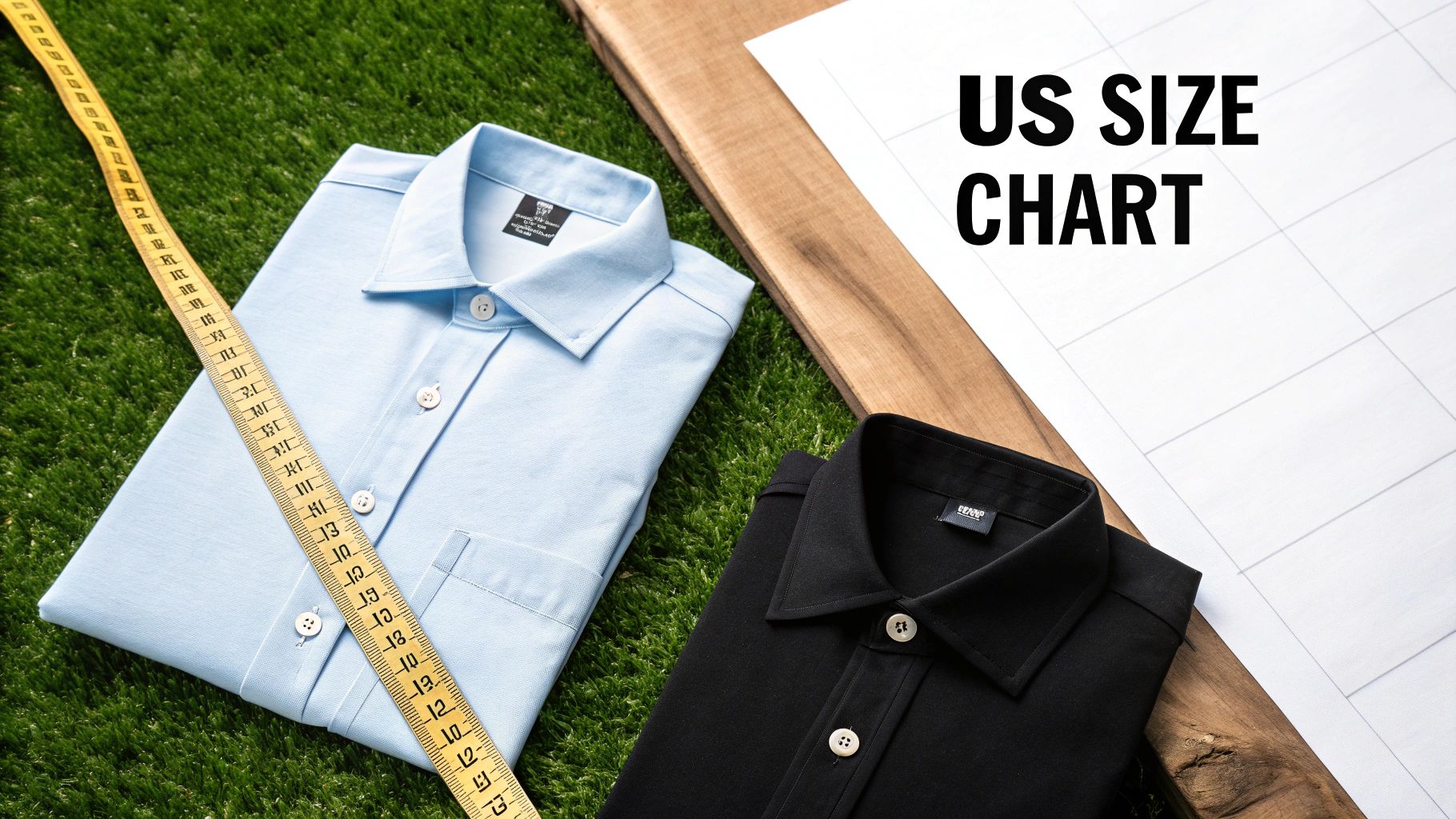
Trying to figure out men's sizing can sometimes feel like you're cracking a secret code. One brand's "medium" is another's "large," turning what should be a simple online purchase into a total gamble. But there's a really interesting backstory to why men's sizing is, for the most part, more straightforward than women's—a history built on pure practicality.
The Military Origins of Standard Sizing
The whole idea behind the modern US men's clothing size chart started way back in the 19th century. The military needed to outfit thousands of soldiers, and they needed to do it fast. Their solution? A brilliantly simple system based almost entirely on chest circumference, measured in inches.
This no-nonsense approach set a standard that has held up remarkably well over the decades, giving men's clothing a foundation of consistency. You can dive deeper into the history of clothing sizes to see just how these early systems grew into what we use today.
Knowing this isn't just trivia; it's a reminder that good sizing is about function. It's a system designed to work, giving you the power to find clothes that fit your body and your creative lifestyle. This guide is here to give you that clarity, so you can shop with confidence and build a wardrobe that’s a true reflection of you.
Here's a quick lookup table to get you started on the right foot.
Quick Reference US Men's General Sizing
This table gives you an at-a-glance look at how general sizes typically line up with key body measurements. It's the perfect cheat sheet for when you're shopping and need a fast answer.
| Size | Chest (inches) | Waist (inches) | Neck (inches) |
|---|---|---|---|
| S | 35-37 | 29-31 | 14-14.5 |
| M | 38-40 | 32-34 | 15-15.5 |
| L | 41-43 | 35-37 | 16-16.5 |
| XL | 44-46 | 38-40 | 17-17.5 |
Keep this chart handy, but remember it’s a starting point. Your unique measurements are what will truly unlock the secret to a perfect fit, every single time.
How to Take Your Own Measurements with Confidence
A great fit is everything. It's the secret ingredient that takes an outfit from just okay to truly sharp. Just as a Brooklyn artisan meticulously hones their craft, taking a moment to measure yourself correctly is an act of creative self-expression. Did you know that Brooklyn is home to over 20,000 artists, designers, and makers? Tapping into that spirit of precision is the first step toward building a wardrobe that actually works for you.
Getting these numbers right gives you the power to look at any US men's clothing size chart and know exactly what you need. All it takes is a flexible tailor's tape and a few quiet minutes. For an even more detailed walkthrough, be sure to check out our complete men's measurement chart for pro tips on perfecting your technique.
The Four Core Measurements
To nail the fit for essentials like shirts and pants, you only need to focus on four key areas. The most important thing? Stand naturally. Don't suck in your gut or puff out your chest—the goal here is to measure the real you, the one who's going to be wearing these clothes with confidence on the streets of Bushwick or DUMBO.
-
Chest: Run the measuring tape around the broadest part of your chest, passing it just under your armpits. Make sure the tape is level all the way around and feels snug, but not so tight that it's squeezing you.
-
Neck: This one is crucial for dress shirts. Simply measure around the base of your neck, right where a collar would comfortably sit. A good rule of thumb is to slip one finger between the tape and your neck to make sure you'll have room to breathe.
-
Waist: Find your natural waistline—it's usually the narrowest point of your torso, often just above your belly button. Wrap the tape measure around that spot, keeping it comfortable without pulling it tight.
-
Inseam: This is the measurement from the very top of your inner thigh down to your ankle. Honestly, the easiest way to get this right is by using a pair of pants you already own and love the fit of. Lay them flat and measure from the crotch seam straight down to the hem.
Mastering Men's Shirt and Top Sizes
A shirt that fits well isn't just a piece of clothing—it's a statement. In a place like Brooklyn, where style is its own language, the right shirt says everything about your confidence and eye for detail. From the brownstones of Bed-Stuy to the warehouses of Red Hook, a great fit is what separates a forgettable outfit from a look that feels completely, authentically you.
Finding that sweet spot begins with getting familiar with the US men's clothing size chart for shirts. Every top, from a sharp dress shirt to your favorite weekend tee, has its own sizing logic. This is about more than just grabbing an L off the rack; it’s about curating your look with the same care a Bushwick artist takes with their canvas.
This quick visual breaks down the essential measurements you'll need—chest, waist, and inseam—to lock in your ideal size.
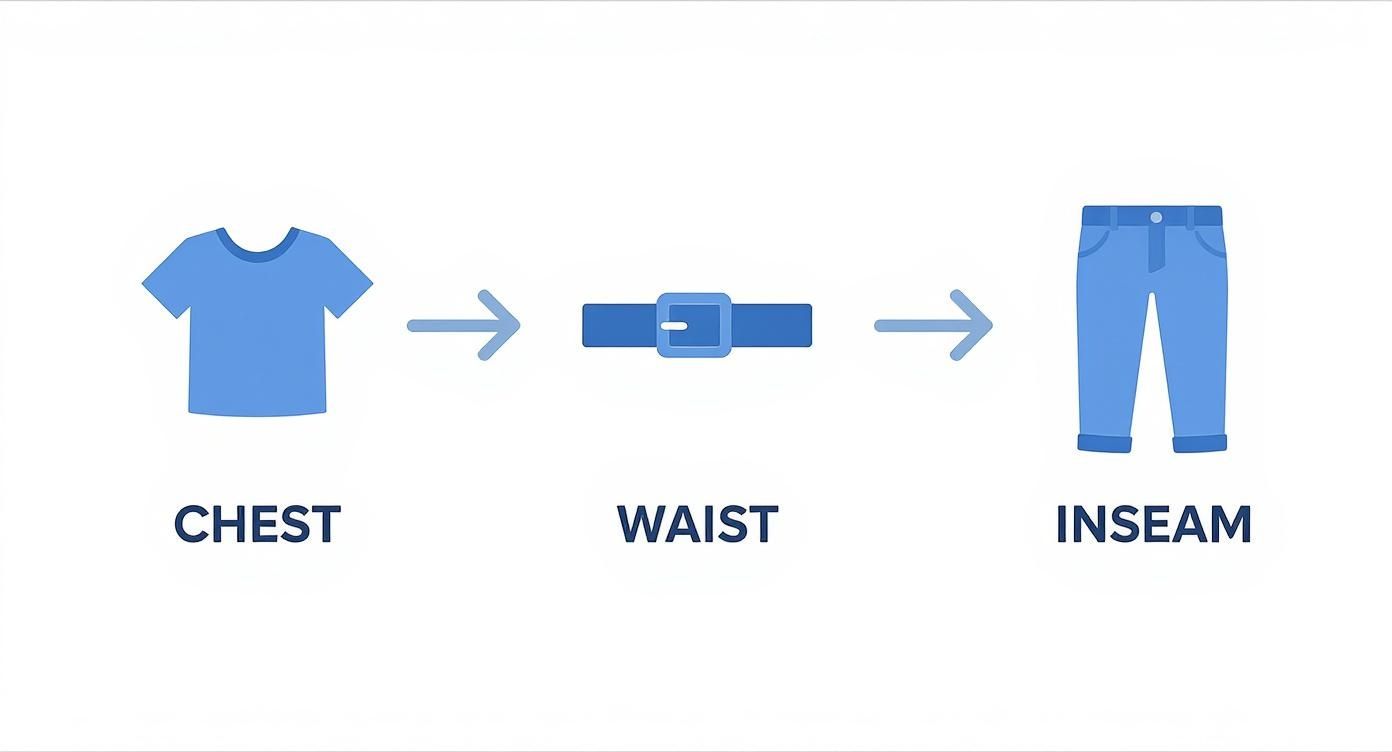
Think of it as a roadmap. A great fit is a sum of its parts, with each measurement building on the last to give you the full picture.
From Classic To Slim Fit
Beyond the raw numbers, the "fit" is where your personal style really comes into play. A classic fit gives you more room through the chest and body, landing on a comfortable, timeless vibe that brings to mind old-school Brooklyn cool. On the other hand, a slim fit sits closer to the body, carving out a modern, defined silhouette you’ll see all over Williamsburg.
The best style starts with knowing your shape, not just your size. When you choose a fit that truly flatters your body, you’re turning a simple piece of clothing into your own signature look, inspired by the borough that invented cool.
Grasping these distinctions is everything. If you're ready to get into the nitty-gritty of how these measurements work across different shirt styles, our complete men's shirt sizing guide breaks it all down. Nail these details, and you’ll build a wardrobe that doesn’t just fit your body—it reflects the unique creative spirit that drives you.
Getting the Right Fit in Pants, Jeans, and Trousers
There’s nothing quite like pulling on a pair of pants that fit perfectly. It’s an instant confidence boost, a subtle signal that you’ve got your style dialed in. But getting there is about more than just grabbing a number off the rack; it's about learning the language of fit, just like a musician learns the notes to create a masterpiece in a Gowanus recording studio.
You’ve probably seen sizes like 34x32. This is the standard Waist x Inseam measurement system. The first number, 34, is your waist size in inches, while the second, 32, is the inseam—the length of the leg from the crotch down to the ankle. Nailing these two numbers is the first step, and it’s a non-negotiable part of any US men's clothing size chart.
But that's just the beginning. The real magic happens when you understand the two other crucial elements: the fit and the rise. These are the details that define the silhouette and express your personal style.
Understanding Fit and Rise
The fit is all about the shape of the pants and how they sit on your body. Think of it as the overall cut that creates a specific look.
- Straight Fit: Your go-to classic. This style runs straight from your hip all the way down to your ankle, giving you a clean, timeless line that works with just about anything.
- Slim Fit: A more modern, tailored look. Slim fit pants taper down from the hip to the ankle, creating a sharper silhouette without feeling too tight or restrictive.
- Relaxed Fit: When comfort is king. This fit gives you more room through the hip and thigh, perfect for a laid-back, easygoing style.
Just as important is the rise, which measures the distance from the crotch seam to the top of the waistband. A low-rise sits below your natural waist for a modern vibe, while a mid-rise hits right at the waist for a traditional, comfortable feel. A high-rise sits above the waist, offering a classic, almost vintage-inspired silhouette.
Getting a handle on these details is what separates a decent outfit from a great one. To see how all these pieces come together across an entire wardrobe, you’ll want to check out our complete size guide for menswear. It’s about making sure your clothes don’t just fit your body, but tell your story.
Finding the Perfect Suit Jacket and Blazer Fit
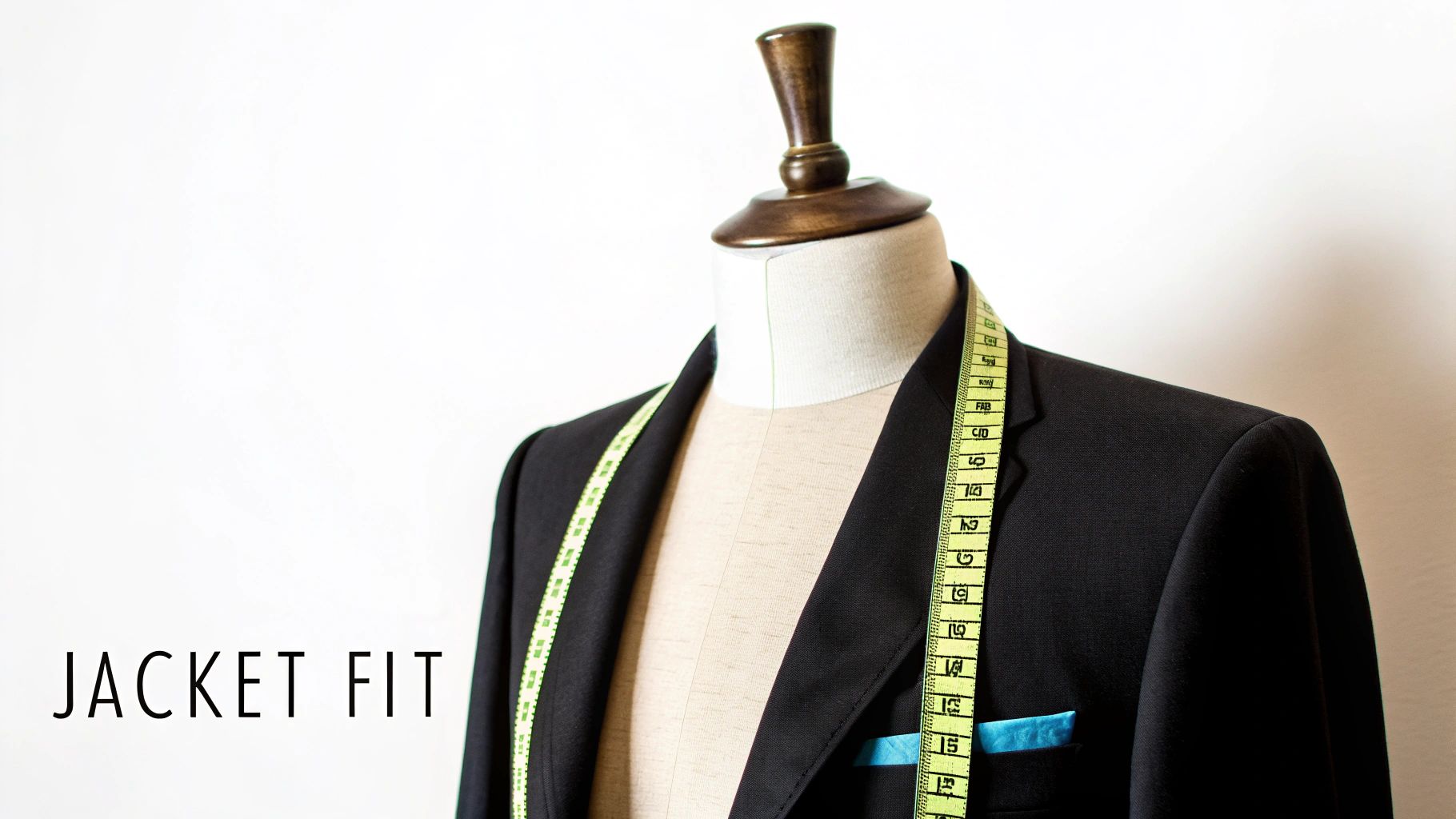
Nothing elevates your style quite like a well-fitted jacket. It's the cornerstone of a sharp, put-together look, inspired by the creative entrepreneurs of Industry City. Getting the fit right is what separates the boys from the men, empowering you to pick something off the rack that feels like it was made just for you.
Forget the simple small, medium, and large. Suit jackets and blazers use a far more precise system, like 40R, and understanding it is the key to a perfect fit. That code isn't just a random label; it's a direct conversation with the tailor who designed the piece.
The number, like the '40' in a 40R, is your chest measurement in inches. This is your starting point, the core dimension that everything else is built around.
Once you have the number dialed in, the letter provides the final, crucial piece of the puzzle: the length. This ensures the jacket is perfectly proportioned to your height and build.
Jacket Length Modifiers
That little letter at the end makes all the difference, creating a silhouette that looks balanced and intentional. It's what ensures your jacket doesn't look like you borrowed it from someone else's closet.
- S (Short): This is for men 5'7" and under. A short length keeps the jacket from looking too long and overwhelming a more compact frame.
- R (Regular): The go-to for most guys, designed for men between 5'8" and 6'0". It's the standard for average heights and proportions.
- L (Long): Tailored for men who are 6'1" and taller. The extra length provides the necessary coverage for a taller build, so the jacket doesn’t appear cropped.
Once you grasp this simple system, you've cracked the code. Combining your chest measurement with the right length modifier means you can walk into any store and confidently interpret any US men's clothing size chart, ensuring you walk out with an impeccable fit every single time.
Finding Your Fit Around the World
Brooklyn's style is a melting pot of global influences, a borough where you can hear over 800 languages spoken. Your wardrobe should be just as diverse. But let's be honest, shopping from international brands can feel like a shot in the dark when their sizing doesn't match the familiar US men's clothing size chart. Think of this as your guide to decoding global style.
Stepping into international fashion is like learning a new dialect of fit. The biggest hurdle is usually the unit of measurement. While the US sticks to inches, most of the world—especially European and Asian brands—uses centimeters. Grasping this simple difference is the key to unlocking a world of new designers and finding pieces that fit you perfectly.
Don’t let a foreign number on a tag throw you off. See it as part of the adventure, a way to broaden your style horizons. Once you get the hang of these conversions, you gain the freedom to shop anywhere on the planet with confidence.
True style knows no borders. Understanding international sizing isn't just a practical skill—it's your passport to a global wardrobe. It empowers you to build a look that’s as unique and worldly as Brooklyn itself.
With a little know-how, you can snag that jacket from a Milanese designer or those jeans from a Tokyo label, knowing they'll fit just right.
Troubleshooting Common Fit Issues
https://www.youtube.com/embed/t2ucWATFsRk
So, you’ve matched your measurements to the US men's clothing size chart and found something that should fit. That’s a huge win! But sometimes, even when the numbers line up, off-the-rack clothing needs a final touch to feel like it was made just for you. This is where the creative spirit of Brooklyn really shines—in the art of personalization.
Don't get discouraged if something isn't perfect right away. Think of it as the last small adjustment that turns a good piece into a great one. This isn’t a flaw in your measurements or the clothing; it’s just the reality that no single size can account for every unique body shape. Learning to spot what can be fixed is the key to mastering your style.
Easy Fixes vs. A Bad Fit
The real secret to a great wardrobe is knowing what a tailor can easily fix versus what’s a fundamental fit problem. This little bit of knowledge can save you a ton of time, money, and frustration.
-
Simple Fixes: A good tailor can work wonders with minor issues. We're talking about sleeves that are an inch too long, pants that need hemming, or a waistband that’s just a little loose. These are typically quick, affordable alterations that dial in the fit perfectly.
-
Signs of a Bad Fit: On the other hand, some problems are red flags. If the shoulders feel tight and restrictive, the fabric pulls across your chest, or the pants are straining at the thighs, the garment’s core proportions are wrong for your body. Trying to fix these issues is often a losing battle—it’s better to size up or look for a different cut altogether.
Perfecting your wardrobe is a creative act. Learning to spot what can be easily tailored is the secret to making every piece you own feel like it was designed just for you.
Understanding this difference is what empowers you to build a closet full of clothes that don't just fit, but actually flatter you and make you feel confident.
Still Have Sizing Questions? We've Got Answers.
Even with the most detailed US men's clothing size chart in hand, a few questions can still come up. That’s perfectly normal. Getting the small details right is what separates a good fit from a great one, and this last section is all about giving you that extra bit of clarity to shop with complete confidence.
Think of it like a Brooklyn artist perfecting their craft—it’s all about appreciating the nuances. One of the most common questions we get is about the real difference between a slim fit and a classic fit. A classic cut gives you more room through the body for that timeless, comfortable feel, while a slim fit is tailored closer to your frame for a sharper, more modern silhouette.
Finding Your Perfect Fit
"How do I actually measure my inseam at home?" This one comes up a lot. The easiest and most accurate way is to grab a pair of pants that you already love the fit of. Lay them out flat and measure straight down from the crotch seam to the bottom of the hem. It's a simple trick that works every time.
Finally, remember that sizing isn't universal. This is where your personal knowledge becomes power. Did you know Brooklyn-based Etsy sellers alone generated over $135 million in sales in one year? They, like many brands, have their own sizing quirks. That’s why knowing your measurements is so powerful—always check them against a specific brand's chart before you buy.
Inspired by the creative spirit of our home borough, The Brooklyn Initiative crafts limited-edition tees that tell a story. Find your perfect fit and wear your love for Brooklyn at https://thebrooklyninitiative.com.