


Imagine a wardrobe where everything you order online just fits. No more guesswork, no more frustrating returns. This guide is your key to that reality, giving you the confidence to shop for clothes that feel like they were made just for you.
Your Journey to the Perfect Fit Starts Here
Finding the right fit is about so much more than a number on a tag—it's about self-expression. Here in Brooklyn, style is a language. You see it everywhere, from the street artist in Bushwick customizing a vintage jacket to the founder in Dumbo with a perfectly cut shirt. It’s not just about looking good; it's about feeling like your most authentic self.
That's the spirit behind this guide. We believe your clothes shouldn't just cover your body; they should celebrate your unique shape. The first step is moving beyond those vague "Small," "Medium," and "Large" labels and learning the specific language of your own measurements. It's a simple skill, but it changes everything.
The Brooklyn State of Mind
Think of this as your personal toolkit for building a better wardrobe. It’s founded on a simple idea: knowledge is power, especially when it comes to your style. In Brooklyn, creativity isn't about having the most expensive stuff; it's about resourcefulness and vision—a trait honed over decades. Did you know Brooklyn was once home to the world's largest sugar refinery, the Domino Sugar Factory? That same spirit of industry and transformation is now channeled into art, fashion, and self-expression.
- Empowerment Over Labels: We're helping you shift focus from a generic size tag to your own personal measurements. You're in control now.
- Confidence in Every Click: This knowledge translates directly into smarter, more confident online shopping, no matter where the brand is from.
- Style as Your Story: Your clothes tell a story. A great fit makes sure that story is told with clarity and conviction.
This isn't about squeezing into a standard size chart; it's about creating your own sizing blueprint. It’s the freedom to know that whether you’re grabbing a limited-run tee from a local designer or a classic from a global brand, it will fit exactly how you want it to.
This whole process is about building a better relationship with the clothes you wear, one piece at a time. Forget the disappointment of a package arriving only to not fit. Instead, picture a closet filled only with items you genuinely love wearing. Let's unlock the simple secrets that will permanently change the way you shop.
Mastering Your Core Body Measurements
This is where you become your own tailor. Forget those confusing diagrams and generic charts for a minute. Let’s have a real conversation about getting your true measurements down, because the sharp, precise fit you need for a blazer is a world away from the relaxed feel of your go-to weekend hoodie. We'll walk through these distinctions so you can become an expert on your own build.
Getting this right is the foundation of a wardrobe that actually works for you. Think of it as an act of self-reliance—a nod to that Brooklyn spirit of owning your story and your style. We're about to build your personal fit profile, a set of numbers that will quickly become the most powerful tool in your online shopping arsenal.
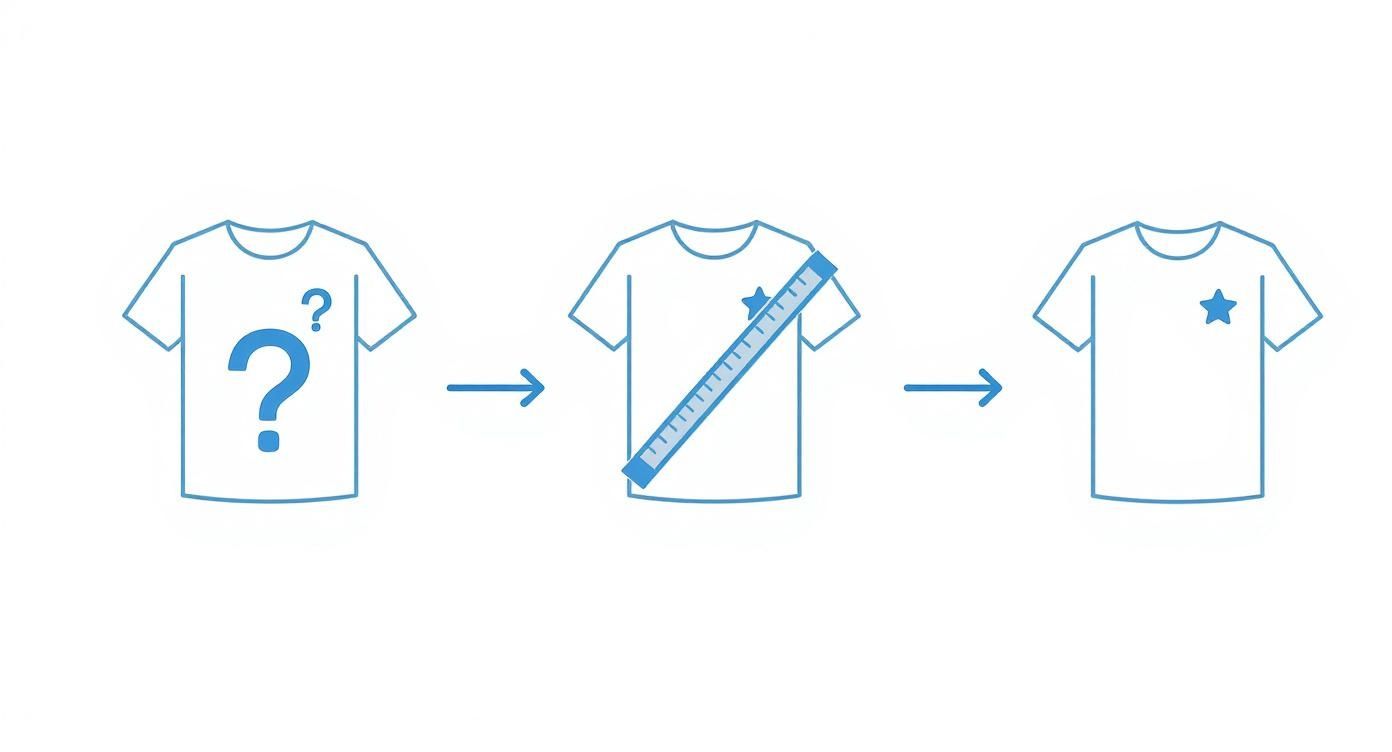
This visual shows it perfectly: the simple act of measuring is the bridge between the frustration of guessing and the confidence of a perfect fit.
Getting Your Chest Measurement Right
Let's start with the chest. This is your anchor point for a great fit in shirts, jackets, and hoodies. Stand naturally with your arms relaxed at your sides. No need to puff out your chest or stand like a soldier—just be you.
Wrap a soft measuring tape around the fullest part of your chest, which is usually right under your armpits and across your shoulder blades. Take a peek in a mirror or ask a friend to check that the tape is level all the way around and isn't drooping in the back.
The tension is key here. You want the tape to be snug, but not so tight that it's digging in or restricting your breathing. A great rule of thumb is to make sure you can slide one finger between the tape and your body. That tiny bit of slack is what separates a comfortable garment from a restrictive one.
Nailing the Waist and Hips
Next up are the waist and hips, which are crucial for finding pants and jeans that feel right from day one. To find your natural waist, locate the narrowest part of your torso, typically just above your belly button, and wrap the tape there, keeping it parallel to the floor.
However, let's be realistic—a lot of guys wear their pants lower, closer to their hips. If that’s you, go ahead and measure where your waistband usually sits. This "pants waist" measurement is often way more practical for buying trousers. Just be honest with the number; it’s for your benefit, nobody else's.
For the hip measurement, stand with your feet together. Measure around the fullest part of your hips and seat. This is especially important if you're a fan of slim-cut styles, as it ensures you'll have enough room to move without the fabric pulling.
The Importance of Inseam and Neck
The inseam is all about the details—it determines how your pants "break" over your shoes, and getting it right makes a huge difference. The easiest, most reliable way to get this measurement is to grab a pair of pants that you already love the length of.
Lay them flat and measure from the crotch seam straight down to the bottom of the hem. That's your golden number. If you don’t have a good reference pair, you can measure from your crotch down the inside of your leg to where you want the pants to end, but the first method is almost always more accurate.
For the neck, a key measurement for any collared dress shirt, just wrap the tape around the base of your neck where a collar would naturally sit. Same as the chest, slip one finger underneath the tape to build in a little breathing room. This simple trick is the difference between a comfortable collar and one that feels like it's choking you all day.
Think of your measurements as your personal style passport. It gives you the freedom to shop any brand, from any country, with the confidence that you’re picking the right size for your body—no more guessing based on a generic label.
Understanding your own numbers helps you see past the marketing hype. For a more detailed breakdown, check out our complete men's measurement chart to see how these numbers translate across different types of clothing. It's an invaluable resource for dialing in your fit profile.
Common Pitfalls to Avoid
Even with the best intentions, a few common mistakes can throw your numbers off. Just being aware of them is half the battle.
- Measuring Over Bulky Clothing: This one’s a classic. Always measure directly against your skin or over a thin t-shirt. Measuring over a thick sweater or jeans will add inches and lead you straight to buying clothes that are too big.
- Pulling the Tape Too Tight: Resist the urge to yank the tape as tight as you can. Your clothes need to move with you, so a snug but comfortable measurement is what you’re really after.
- Not Keeping the Tape Level: It's easy for the tape to sag in the back when you're measuring your chest or hips. This is one of the most common errors, and it will definitely lead to an inaccurate reading.
This process is about precision, but it's also about being honest with yourself. It connects you to the reality of your own build, which is a seriously empowering first step. Knowing your numbers also helps you understand the bigger picture. For instance, apparel sales data shows that a size Large (L) is the most sold shirt size globally, making up around 30% of sales for a chest of 42-44 inches. Medium (M) is right behind it at 28% (38-40 inches), with Extra Large (XL) at 20% (46-48 inches). This just goes to show how your personal stats fit into the wider world of men's fashion and manufacturing.
Decoding Brand Sizing and International Charts
Ever felt the frustration of ordering a "Large" from a cool European brand, only to find it fits like a Medium from your go-to US label? It's a common story. Stepping into the world of global fashion is a bit like exploring different cultures—each has its own language, and sizing is no exception. This isn't a mistake; it's just a reminder that "Large" doesn't mean the same thing everywhere.
Think of this section as your passport to becoming a smarter, more confident international shopper. We're going to pull back the curtain on brand-specific sizing and international charts. You'll learn the why behind the numbers, not just the numbers themselves. It’s like learning the local dialect of style.
Why Every Brand Speaks a Different Sizing Language
Here’s the thing: there is no single, legally-enforced global standard for clothing sizes. Each brand builds its sizing system around one core idea: its ideal customer. A brand inspired by skaters will cut clothes differently than a heritage brand. This diversity is what makes fashion interesting—much like Brooklyn itself, which is said to have more than 200 languages spoken within its borders. Your personal measurements are your universal translator.
Once you get this, your whole perspective shifts. You stop seeing a size chart as a rigid set of rules and start seeing it as a brand's unique point of view on fit. It’s an invitation to see if their vision works for your body, putting you in control.
Cracking the Code on International Sizing
Shopping from international brands is one of the best ways to discover unique pieces, but it comes with its own set of sizing puzzles. Each country has its own system, which can get confusing fast.
For example, a US shirt with a 38-40 inch chest is typically a size Medium. In the UK, that same fit might be labeled as a 15.5" collar size, and in Europe, it would be a 48. Pants are a little more straightforward, but not always. A 32" waist in the US and UK often corresponds to a 48 in European sizing. Knowing these little differences is what makes or breaks an online order.
To make things a bit simpler, here’s a quick-glance table to help you translate the most common sizes.
Men's International Size Conversion Chart
This table offers a solid starting point for comparing common shirt and pant sizes across the US, UK, and European standards.
| Measurement Type | US Size | UK Size | EU Size |
|---|---|---|---|
| Shirts | Medium | 15.5" | 39 |
| Suits / Blazers | 40 | 40 | 50 |
| Pants / Trousers | 32" | 32" | 48 |
| Shoes | 10 | 9.5 | 43 |
Remember, this is a general guide. The most important step is to always check the specific brand’s chart before you buy.
Use Model Specs as Your Secret Weapon
Here’s a pro-tip that will completely change how you shop online: pay close attention to the model's measurements and the size they're wearing. This is easily the most overlooked tool on any product page.
- Model Height & Weight: This gives you a quick baseline. If a model is 6'2" and wearing a Medium for a standard fit, and you're 5'10", you can instantly guess that the garment will likely be a bit longer on you.
- Model Chest & Waist: This is where the real magic happens. If a model has a 40-inch chest and is wearing a Large for a "relaxed fit," but you want a sharper, more tailored look, you know a Medium is probably your best bet.
- The Fit Description: Always read the description—words like "slim fit," "true to size," or "oversized" are crucial context clues. Combine this with the model's stats, and you can build a very accurate picture of how that piece is designed to drape.
By comparing the model’s specs to your own, you're no longer just guessing a size; you're reverse-engineering the perfect fit. It’s a smarter, more analytical approach to building your wardrobe.
This simple technique turns shopping from a gamble into a calculated decision. You're using real-world data to predict the outcome, which gives you the confidence to try new brands without worrying about returns.
Reading Between the Lines of a Size Chart
A brand's size chart is so much more than a grid of numbers; it’s a peek into its entire design philosophy.
Are the chest-to-waist measurements dramatically different? That signals a tapered, athletic cut. Do their pants have a bit more room in the hips and thighs? They're probably designing for comfort. For a deeper look into American sizing conventions, check out our dedicated guide on the US men's clothing size chart.
Learning to spot these subtle clues is what separates an amateur from an expert online shopper. It’s about building an intuition for how different clothes will fit your body, allowing you to curate a wardrobe that’s not just stylish, but perfectly and personally yours.
The Art of Choosing the Right Fit
A size tag gets you in the ballpark, but the fit—slim, classic, relaxed—is what tells the real story. This is where your personal style comes alive. It's the difference between a shirt that just covers your body and one that feels like it was made for you, an extension of your personality.
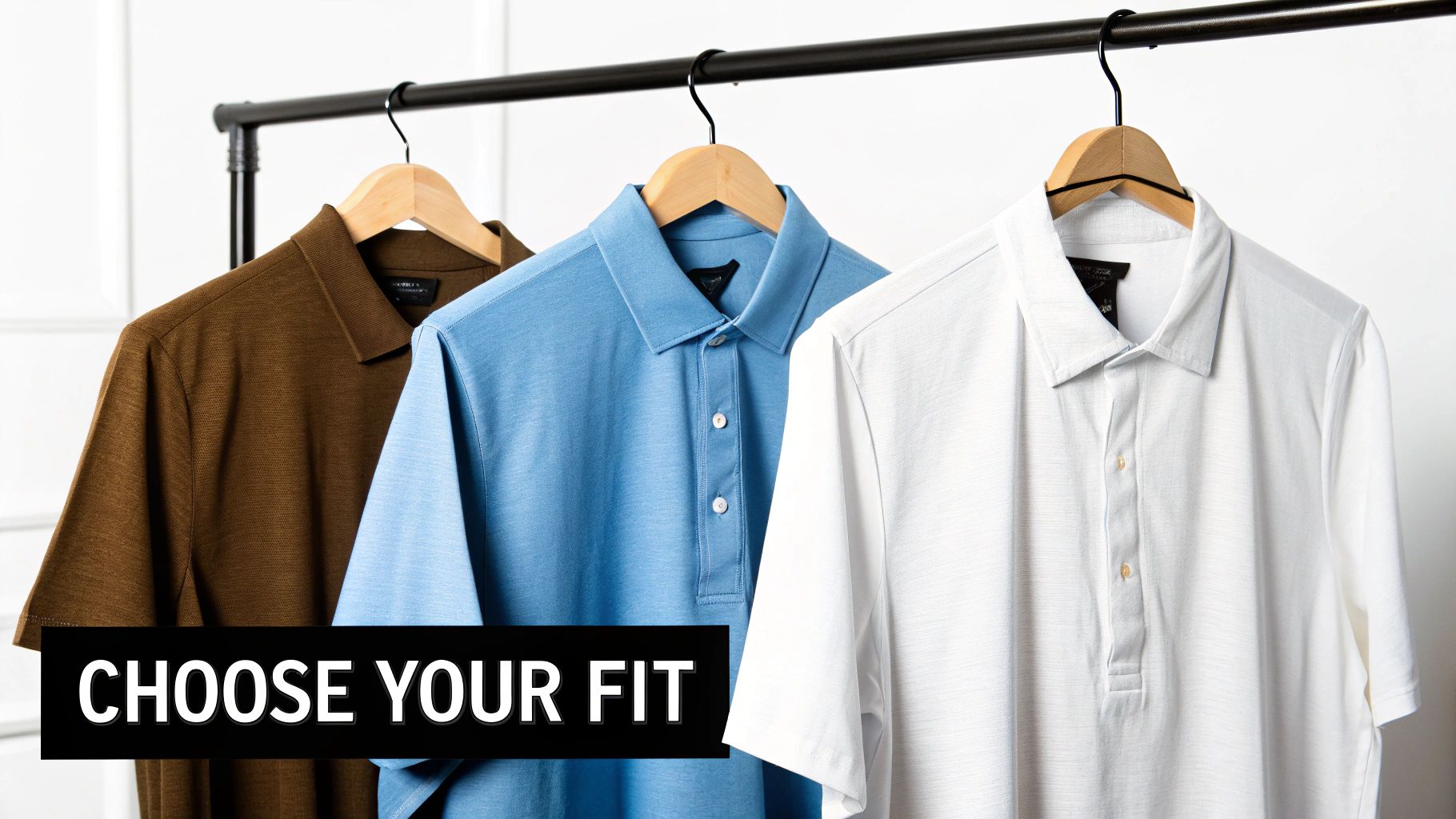
This is where you move from just wearing clothes to actually building a look. Getting a feel for the DNA of each fit gives you the power to shape your silhouette and decide how you want to show up in the world.
The Power of the Slim Fit
A slim fit is all about a clean, modern silhouette. It's tailored to follow the lines of your body without feeling like a straitjacket. All the excess fabric is trimmed away, creating a sharp, intentional look that’s hard to beat.
This is the fit you reach for when you want to look polished. It’s especially flattering on slender to athletic builds because it highlights your frame without clinging. A slim-fit tee from The Brooklyn Initiative, for instance, is cut to feel contemporary and sharp—perfect for a gallery opening in Chelsea or a night out in Williamsburg.
Embracing the Classic Fit
The classic fit is the undisputed workhorse of menswear. Often called a "regular" or "standard" fit, it’s a timeless cut that prioritizes comfort and ease of movement. It gives you a little more room through the chest and waist than its slim counterpart.
This is your reliable, everyday go-to. It drapes naturally over the body, giving you a straight, traditional silhouette that works for almost any guy. A classic fit strikes that perfect balance between structure and comfort, making it a foundation piece for any wardrobe.
Fit is the soul of your style. A great fit doesn’t just make you look better—it makes you feel more confident and connected to who you are. It’s the silent language that communicates your attention to detail and your respect for yourself.
By understanding these nuances, you can build a more expressive wardrobe. For a deeper dive into finding the perfect cut, our men's shirt sizing guide offers more specific tips on how different fits work with various body shapes.
The Freedom of the Relaxed Fit
Think of the relaxed fit as comfort and attitude in clothing form. It’s cut generously through the body and sleeves, often with a dropped shoulder, to create an easygoing vibe that’s perfect for weekends or any time you want to feel completely unrestricted.
This fit is about playing with proportion and movement. It's not about hiding your shape, but about expressing a more casual, artistic style. This creative freedom is a Brooklyn hallmark; in fact, the borough has more independent artists, writers, and designers than any other city in the United States. A relaxed-fit graphic tee makes a powerful statement, giving you a canvas for bold designs while keeping you comfortable all day long.
How Fabric Changes Everything
Never underestimate the power of fabric. The material is a huge part of the fit equation, dictating how a garment drapes, stretches, and feels against your skin. It can completely change the character of a cut.
- 100% Cotton: The breathable, durable heart of a great t-shirt. In a classic fit, it softens beautifully over time. In a slim fit, high-quality cotton holds its shape for a crisp look.
- Cotton Blends with Elastane/Spandex: That little bit of stretch—even just 2-5%—is a game-changer. For a slim-fit shirt, it adds critical flexibility, allowing the garment to move with you for an almost custom feel.
- Heavier vs. Lighter Fabrics: A heavyweight cotton tee has a more structured, boxy drape that works incredibly well with a relaxed fit. On the flip side, a lighter, softer fabric drapes closer to the body, enhancing the clean lines of a slim fit.
Choosing the right fit is an act of self-expression. It’s your chance to move beyond the simple mechanics of a size guide for men and start curating a wardrobe that truly reflects your personal story and creative spirit.
Protecting Your Perfect Fit After the Purchase
You’ve found it—the perfect tee that nails that authentic Brooklyn vibe and fits exactly how you envisioned. But finding the fit is only half the battle; keeping it is where the real work begins. Now, you get to be the guardian of your wardrobe, making sure that shirt you love stays perfect for years.
Think of your best clothes as an investment in your personal style. Like any good investment, they need a little care to hold their value. Let’s break down the simple, effective ways to prevent that dreaded shrinkage and keep your favorite pieces looking brand new.
Understanding the Enemy: Shrinkage
The biggest threat to a perfect fit is hiding in your laundry room. Heat and agitation are the main culprits, especially for natural fibers like the 100% cotton in our tees. When you combine hot water with the high heat from a dryer, you’re basically telling the fibers to tighten up and shrink, permanently changing the garment’s size.
The good news? It’s surprisingly easy to prevent. Cold water is your best friend. Washing your graphic tees in cold water and using a low-heat setting on your dryer makes a huge difference. Even better, air-drying by laying the shirt flat is the ultimate way to protect its original shape and size.
Cracking the Code on Laundry Symbols
Those little symbols on the care tag can feel like hieroglyphics, but they're actually a simple roadmap to making your clothes last. Once you know the basics, you'll never be confused again.
- The Tub Icon: This is all about the wash. A number inside is the max water temp, and a hand means you should wash it by hand. A single line underneath? That's telling you to use a gentle cycle.
- The Square Icon: This one's for drying. If there's a circle inside, it’s safe for the tumble dryer. A square with a little curved line at the top means "hang to dry."
- The Triangle Icon: This symbol is your guide to bleach. An empty triangle means any bleach is okay. If it has diagonal lines through it, stick to non-chlorine bleach only.
Preserving your fit is an art of intention. By treating your clothes with care, you're not just doing laundry—you're curating a wardrobe that reflects your respect for craftsmanship and personal style.
This attention to detail also sheds some light on why sizes can feel a bit inconsistent right off the rack. The way men's clothing sizes have evolved reflects huge shifts in average body types and commercial trends like vanity sizing. Standardized sizes in the U.S. really started taking shape in the 20th century, but what was considered an XL in the 1950s might feel closer to a Large today. You can dive deeper into the history of clothing sizes on Wikipedia to learn more.
Smart Storage for a Lasting Shape
How you store your clothes is just as crucial as how you wash them. The wrong storage method can stretch out fabrics and ruin a garment’s silhouette just as fast as a hot dryer.
For t-shirts, folding is always better than hanging. Over time, hanging can cause the shoulder seams to stretch, especially with the weight of quality cotton. This is even more critical for sweaters and knits—always fold them to keep gravity from distorting their shape.
It's a simple habit, but it ensures that when you pull out your favorite tee, it fits just as perfectly as the day you brought it home. And with that, you've mastered this comprehensive men's size guide.
Your Sizing Questions Answered
Even with the best measurements, finding the perfect fit can sometimes feel like a puzzle. Think of it less as a problem and more as an opportunity to dial in your personal style. Let's tackle some of the most common questions that come up.
This isn't just about getting clothes that fit; it's about building a wardrobe that feels like you. Every piece should build on your personal story, much like the iconic brownstones that define Brooklyn's neighborhoods. Fun fact: the term "brownstone" refers to the sandstone façade, a popular building material in the 19th century that gave these homes their distinctive, creative character.
What If I'm Between Two Sizes?
This is probably the most common sizing dilemma out there. The answer really comes down to two things: the item's intended fit and its fabric.
If you're looking at a structured, slim-fit piece with no stretch—like a crisp woven shirt—your best bet is almost always to size up. A tight fit in a rigid fabric looks and feels restrictive, and that extra bit of room is key for comfort and movement.
On the other hand, for something with a little give, like a regular-fit t-shirt with some stretch in the blend, you can often size down. The fabric will adapt to your shape, giving you a cleaner, more tailored look without feeling tight.
Pro Tip: When it comes to pants, always prioritize a perfect fit in the waist and seat. You can always have a local tailor easily adjust the length.
How Much Do Clothes Actually Shrink?
Shrinkage is all about the fabric. Natural fibers are the most likely to shrink, so knowing how they behave is the key to making your favorite clothes last.
- A 100% cotton shirt, a staple in any wardrobe, can shrink up to 5%. This is most likely to happen if you use hot water and high heat in the dryer.
- Wool is even more sensitive. It needs cold water to prevent it from felting and shrinking dramatically.
Think of your laundry routine as the final step in styling. Following the care instructions on the tag isn't just a suggestion; it's how you protect the fit and feel of the clothes you've chosen to represent you.
For our graphic tees, the formula is simple: wash in cold water and tumble dry on low. This easy habit preserves both the size of the shirt and the integrity of the art.
Why Is My Size Different From Brand to Brand?
This is a universal frustration, and the reason is simple: there’s no legally enforced sizing standard in the industry. Every brand has its own unique point of view and designs for its ideal customer.
A brand targeting skaters is going to cut its 'Medium' much slimmer than a heritage brand known for more traditional, relaxed fits. This is exactly why taking your own measurements is so powerful.
It sets you free from the letter on the tag and lets you use a brand's size chart as your true guide. You're no longer just guessing and hoping for the best; you're making an informed choice. This knowledge gives you the confidence to shop any collection, from any designer, and find the right fit every single time.
Your style journey is a personal one, and The Brooklyn Initiative is here to provide the canvas. Our limited-edition tees are designed to be a part of your story, fitting not just your body, but your spirit. Explore the collection at https://thebrooklyninitiative.com and wear your story with pride.