


The right t-shirt isn't just about the design you choose; it's about the confidence that comes from a perfect fit. Think of a men's measurement chart as your secret weapon, the one tool that closes the gap between a tee you love online and one that looks like it was made just for you. It turns the guesswork of sizing into a simple science, making sure your clothes don't just fit your body, but your unique, creative spirit, too.
The Art and Science of a Perfect Fit
Every iconic design, from a mural in Bushwick to a limited-edition drop, needs a solid foundation to truly shine. In the world of clothing, that foundation is the fit. A shirt that hangs just right doesn't just look better—it feels better, moving with you and becoming a true extension of yourself. This is why a men's measurement chart is so much more than a table of numbers; it's your personal blueprint for style.
Knowing your measurements puts you in the driver's seat. It's a small act of self-knowledge that makes a huge difference every time you get dressed, allowing you to shop with purpose and precision. But this whole idea of standardized sizing didn't start in a high-fashion studio—it was actually born on the battlefield.
From Battlefield Necessity to Modern Style
Believe it or not, the concept of a standard men's measurement chart has its roots in the mass-production demands of the 19th century. During the American Civil War (1861–1865), the military had to quickly outfit thousands of soldiers, making custom tailoring impossible. Their solution? Grouping soldiers into basic sizes like small, medium, and large, based mostly on chest measurements.
It was a practical fix born from pure necessity. While this early system only gave about 25% of soldiers a truly perfect fit, it was a game-changer that paved the way for the ready-to-wear industry. You can explore more about the history of clothing sizes and see just how far we've come.
This battlefield innovation ultimately made fashion accessible to everyone, a story of creative problem-solving under pressure that feels right at home with Brooklyn's own spirit of invention.
Today, that legacy lives on. When you take the time to master your own measurements, you’re not just shopping smarter—you're honoring a history of innovation. Just like a DUMBO artist repurposes industrial materials into stunning sculptures, you're taking control of your style and expressing who you are with creativity and confidence.
How to Measure Your Body for Clothing
Getting your measurements right is more than just a practical step; it's a way to connect with your own style on a deeper level. Think of it as the ultimate act of self-care for your wardrobe. When you know your numbers, you're not just guessing at sizes online—you're making informed choices that guarantee a perfect fit every single time. It’s the secret to building a collection of clothes that feels like it was made just for you.
All you need to get started is a soft, flexible tape measure. Stand up straight but don't be rigid; just a natural, relaxed posture is perfect. The goal here is to measure your actual body, not the size you hope to be. Remember to breathe normally and keep the tape snug, but not tight enough to pinch.
The Five Essential Measurements
Mastering these five simple measurements will completely change the way you shop for clothes. Taking a few moments to get these right is an investment in your confidence and personal style, from finding that perfect t-shirt to a crisp new shirt.
- Chest: Raise your arms out to the sides and wrap the measuring tape around the broadest part of your chest. The tape should run under your armpits and across your shoulder blades, staying level with the floor.
- Waist: Find your natural waistline—it's usually the slimmest part of your torso, right above your belly button. Wrap the tape measure around this point to get your number.
- Hips: With your feet close together, measure around the fullest part of your hips and seat. Just like with the chest measurement, make sure the tape is parallel to the ground all the way around.
- Inseam: This one is a bit different. It measures the length from your inner thigh (at the crotch) all the way down to your ankle. The easiest way to do this is by measuring a pair of pants you already own that fit you well.
- Neck: To find your collar size, wrap the tape around the base of your neck where a shirt collar would sit. For a comfortable fit, slide one finger between the tape and your neck before you note the measurement.
This infographic captures the fascinating journey of clothing sizes, from the days of custom-tailored everything to the standardized charts that guide us today.
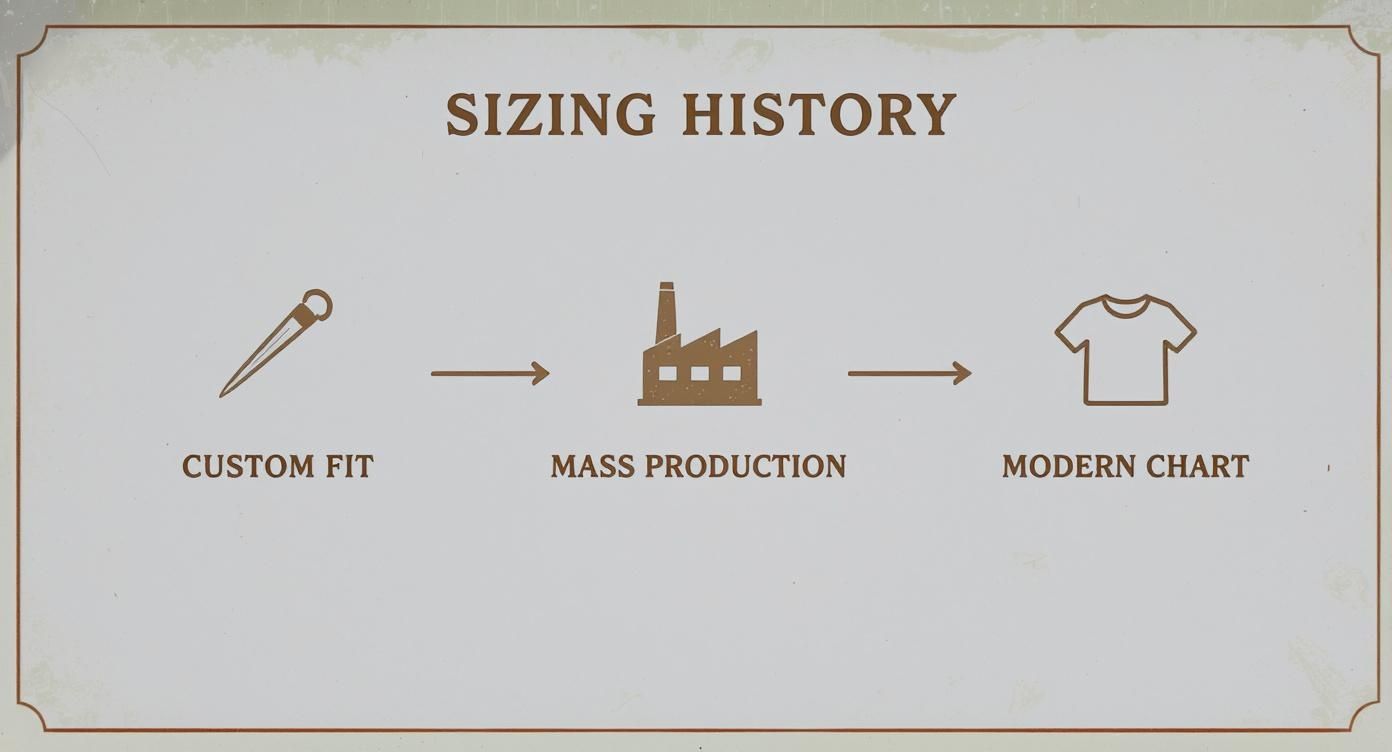
It’s a story of innovation that brought great style to everyone, and that’s a spirit we love to celebrate. To see how these measurements translate into real-world sizes, take a look at our complete size guide for men.
Men's T-Shirt Size and Measurement Chart
Welcome to the core of our guide—your ultimate resource for discovering a t-shirt that feels like it was made just for you. A truly great fit isn't just about comfort; it's a form of self-expression and a way to wear your confidence on your sleeve. Think of this men's measurement chart as the key to unlocking that feeling, every single time.
Use this chart as your trusted reference. We designed it to be a quick and easy tool, cutting through the confusing world of sizing to give you clear, empowering answers. Whether you're buying online or trying things on in-store, these numbers will steer you toward the perfect silhouette.
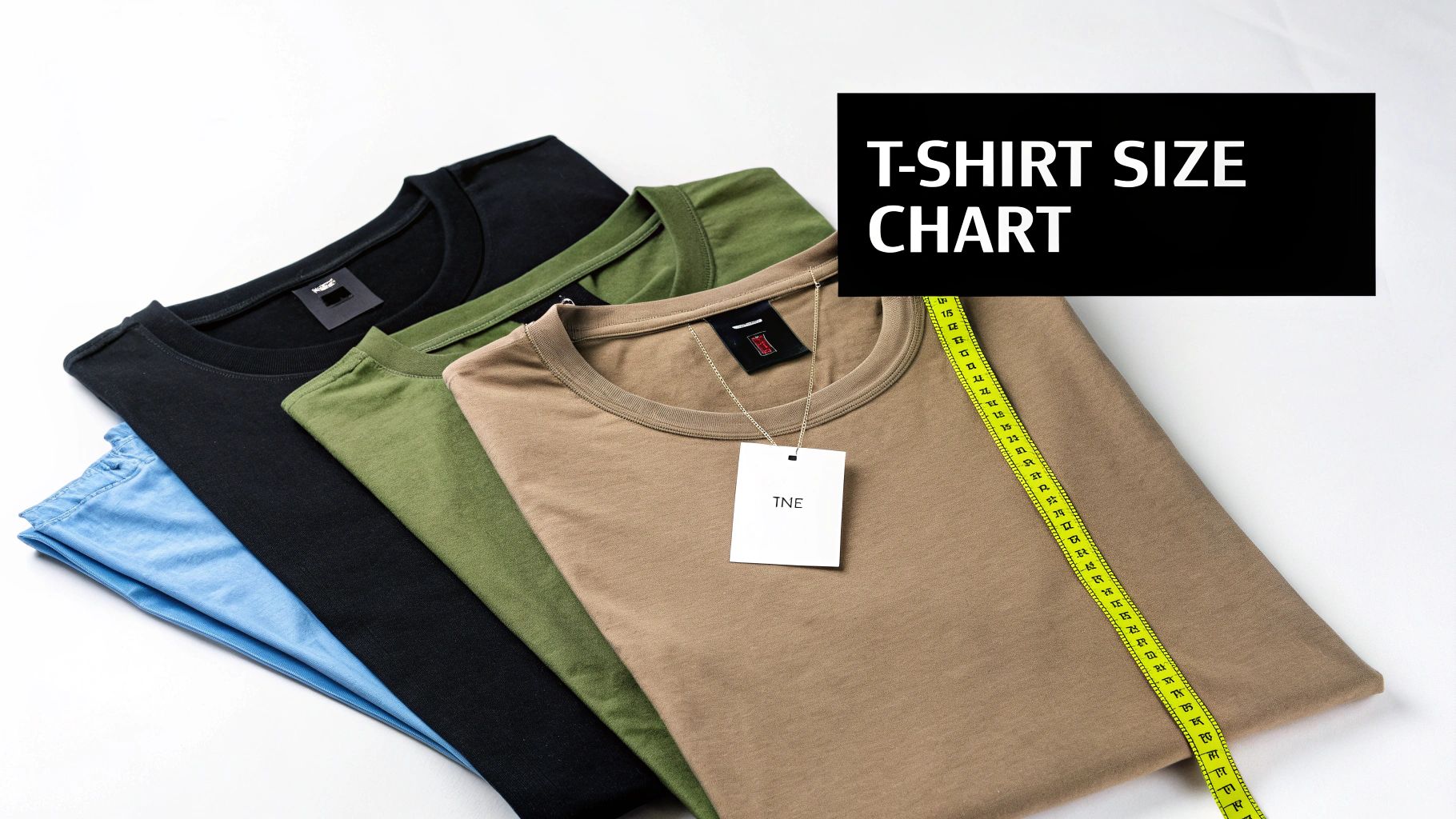
Standard Men's T-Shirt Size Chart (Inches/cm)
Here’s where we get down to the details. The table below breaks down standard t-shirt measurements from size XS all the way up to XXXL. Simply find your chest and waist measurements to see where you land, and check the length to ensure it hits just right.
| Size | Chest (in/cm) | Waist (in/cm) | Length (in/cm) |
|---|---|---|---|
| XS | 30-32 / 76-81 | 28-30 / 71-76 | 27 / 68 |
| S | 34-36 / 86-91 | 30-32 / 76-81 | 28 / 71 |
| M | 38-40 / 96-101 | 32-34 / 81-86 | 29 / 74 |
| L | 42-44 / 106-111 | 36-38 / 91-96 | 30 / 76 |
| XL | 46-48 / 116-121 | 40-42 / 101-106 | 31 / 79 |
| XXL | 50-52 / 127-132 | 44-46 / 111-116 | 32 / 81 |
| XXXL | 54-56 / 137-142 | 48-50 / 121-127 | 33 / 84 |
A quick word of advice: think of this as your starting point. While these are standard figures, every brand has its own unique sizing. It’s always a good idea to check their specific charts when you can. For a more detailed walkthrough, explore our complete men's sizing guide.
Understanding Different T-Shirt Fits
Beyond the raw numbers on a chart, the actual fit is what gives a shirt its true character. It’s the subtle difference between a shirt that just hangs on you and one that genuinely elevates your look.
- Slim Fit: This cut stays closer to the body, creating a sharp, modern, and tailored appearance.
- Athletic Fit: Built for movement, this style gives you more room in the chest and shoulders but tapers down at the waist.
- Relaxed Fit: All about comfort. It provides generous space throughout for a laid-back, casual vibe.
Picking the right fit is about matching your clothes to your lifestyle and personality. It’s that final, creative touch in the art of dressing well.
Navigating International Sizing Differences
Ever find an amazing t-shirt from a brand overseas, only to be stumped by the sizing? You’re not alone. Think of global fashion as a vast, exciting world, but one where every country speaks a slightly different language when it comes to fit.
That "Medium" from a brand in Tokyo might fit more like a "Small" from a designer in New York. This isn't an error; it's simply a reflection of different sizing standards around the globe. The secret to unlocking a world of style is to look past the letter on the tag and focus on the actual measurements. Once you do that, you can shop confidently from anywhere, turning the entire globe into your personal closet.
Understanding Global Size Variations
Getting a handle on the key differences between regional sizing systems can save you a ton of hassle and prevent the disappointment of an ill-fitting tee. It’s the first real step toward building a truly international wardrobe.
Here’s a quick breakdown of what you'll encounter:
- US/UK Sizing: These two are often very similar. They rely on inches for measurements and use the S, M, L labels we all know.
- European (EU) Sizing: You'll typically see numerical sizes here (like 48, 50, or 52), which usually correspond to half the chest measurement in centimeters.
- Asian Sizing: This is the one to really watch out for. Garments from Asian brands often run smaller than their US or EU counterparts, so it's not uncommon to size up one or even two full sizes.
These differences aren't random; they’re often tied to the historical and regional data on average body types. For instance, thanks to improvements in nutrition and healthcare, the average height of men has shot up over the last couple of centuries. The average man in the US now stands at about 68.9 inches (175 cm), a significant change that directly influences the sizing charts designers create. You can discover more about how human height has changed over time to see the data for yourself.
Learning to navigate these sizing differences is a creative act. It’s like discovering the hidden subway lines that only locals know—once you master them, you unlock access to a whole new world of style, connecting you with a global community of creators.
Applying Your Measurements to Any Garment
Getting your core t-shirt measurements down is a game-changer, but the real magic happens when you start applying that knowledge across your entire wardrobe. Think of your chest, waist, and hip numbers as your personal style blueprint, the foundation for building a collection where every single piece just works. This is the moment you graduate from simply buying clothes to intentionally curating a look that’s sharp from head to toe.
That little bit of effort you put in upfront with the measuring tape pays off big time. Your chest measurement, for instance, isn't just for tees; it's the secret to a blazer that drapes perfectly across your shoulders for that strong, put-together silhouette. In the same way, knowing your actual waist size is what gets you trousers that are both comfortable and clean-lined.
Suddenly, you’re not just hoping something fits off the rack—you’re buying with the confidence that it will.
Key Measurements for Other Garments
When you venture beyond the classic tee, you’ll want a few more specific measurements in your back pocket. These are the details that take an outfit from "good" to "great," making every piece look like it was tailored just for you.
-
Sleeve Length: This is a must-know for dress shirts and jackets. To get it right, measure from the center of the back of your neck, run the tape over the top of your shoulder, and down to your wrist bone.
-
Shoulder Width: For coats and blazers, this is non-negotiable. Measure straight across your upper back, from the tip of one shoulder to the tip of the other. This prevents any awkward pulling or bunching and ensures the garment sits perfectly.
-
Outseam: This is your go-to for trousers. Simply measure from your natural waistline down the outside of your leg to the spot where you want the hem to land.
"Understanding how one measurement informs another is a creative skill. It’s like a Brooklyn artist knowing exactly which colors will make their mural pop—it’s a blend of technical knowledge and personal vision that brings the final piece to life."
Once you've mastered these extra measurements, you can shop for more structured pieces without any of the guesswork. If you're looking for more tips, our men's shirt sizing guide takes a deeper dive into nailing the fit for button-downs and other essentials. It’s all about building a wardrobe that doesn’t just fit your body, but truly expresses your personal style.
Common Sizing Mistakes You Can Easily Avoid
Let's be honest, nothing kills your style faster than a poor fit. Think of this as getting a few insider tips from a seasoned tailor—the kind of advice that helps you dodge the frustration of a bad purchase and start building a wardrobe where everything looks like it was made just for you. Getting your measurements right is your secret weapon.
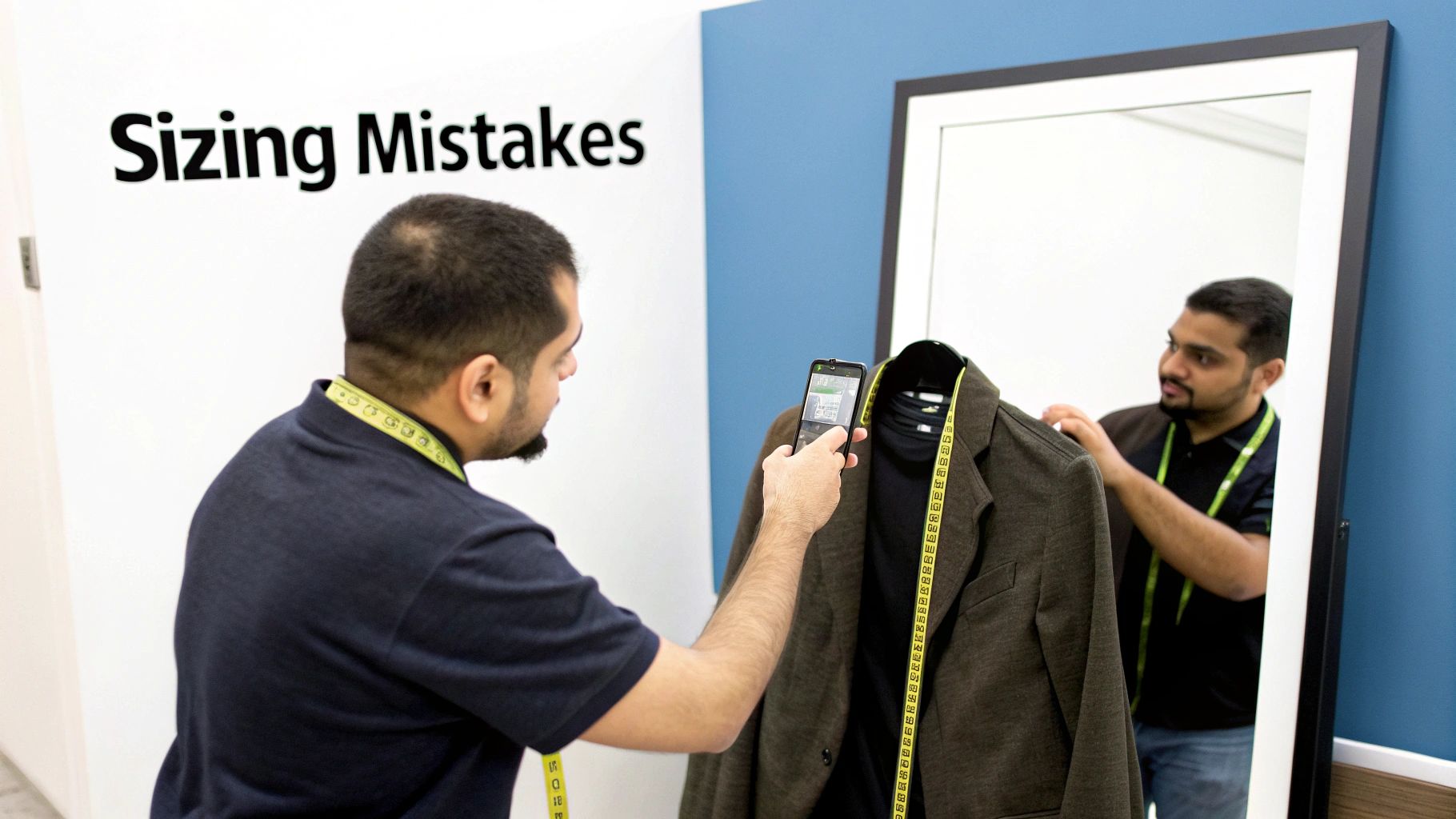
One of the biggest blunders I see is people measuring themselves over bulky clothes. To get your true numbers, you need to measure close to your skin. A thin undershirt is fine, but that’s it. This single step is the key to ensuring your new shirt drapes correctly instead of bunching up awkwardly.
Overlooking the Details
Beyond the basics, a few small slip-ups can throw everything off. A classic mistake is ignoring a specific brand's size guide. That "Medium" you've been buying for years can vary wildly from one company to the next. Always, always check your numbers against their unique men's measurement chart.
Another thing to remember is the fabric itself. Natural fibers like cotton have a tendency to shrink a bit after a wash, so planning for that by giving yourself a little extra room is always a smart move.
"A great fit is a form of self-respect. It’s the creative act of presenting your best self to the world, just like the legendary Notorious B.I.G., a Brooklyn native who used his one-of-a-kind style to become a global icon. It all starts with owning your look."
And here's a big one: assuming your pants size is your belt size. It's not! The golden rule is to add two inches to your pant size to find the right belt. So, if you wear a size 34 pant, you need a size 36 belt. Simple as that.
Keep these quick tips in your back pocket, too:
- Don't Pull the Tape Too Tight: You want the tape to be snug, but not digging in. A good rule of thumb is to make sure you can slide one finger comfortably between the tape and your body.
- Keep the Tape Level: Whether you're measuring your chest, waist, or hips, make sure the tape measure is perfectly parallel to the floor all the way around. An angled tape will give you a wrong number every time.
- Measure Twice, Buy Once: It takes just a few seconds to double-check your numbers, and that small effort can save you the major headache of dealing with returns.
Once you master these simple rules, you take the guesswork out of shopping. It stops being a game of chance and becomes an art that you're in complete control of.
Your Sizing and Measurement FAQs Answered
Even with the best men's measurement chart in hand, a few questions can still linger. Let’s clear up that last bit of uncertainty, turning any confusion into total confidence so you can pick pieces that feel like they were made just for you.
Finding yourself between two sizes is one of the most common fitting puzzles. It happens to the best of us. The best way forward depends entirely on the shirt's fabric and the look you're going for. For a classic 100% cotton tee, it's usually wise to size up—it'll likely shrink just a little in the wash. On the other hand, for a modern stretch-blend or a shirt labeled "slim-fit," the smaller size will probably give you that sharp, form-fitting silhouette.
Breaking Down the Fit Lingo
Sizing labels can feel like a foreign language, but they're pretty straightforward once you know the key terms. Nailing the difference between fits is the secret to choosing a shirt that complements your build and your personal style. It's about picking something that doesn't just fit your numbers, but fits your life.
-
What's the difference between "Slim Fit" and "Athletic Fit"? A slim fit is cut close to the body all around, especially through the chest and waist, creating a sleek, contemporary look. An athletic fit, however, gives you more room through the shoulders and chest before tapering down to the waist. It’s designed for a broader frame, offering comfort up top without any bagginess below.
-
Should my t-shirt length cover my belt? Yes, definitely. For a clean look, your t-shirt hem should fall about two inches below your beltline, landing somewhere around the middle of your fly. This length is perfect because it won't ride up every time you lift your arms, and it's long enough to tuck in if you want to.
Getting these details right is where the art of style comes in. It’s like knowing the perfect spot on the Brooklyn Bridge for a photo—this kind of insider know-how transforms dressing from a daily chore into a form of self-expression. True confidence comes from feeling great in what you wear.
Ready to find that perfect fit? The artists at The Brooklyn Initiative create incredible limited-edition tees that capture the spirit of the borough. Discover your new favorite shirt at The Brooklyn Initiative's online store.