


To truly get a handle on Brooklyn's neighborhoods, you have to realize you’re not just looking at a map. You're diving into an epic story of reinvention, a journey that took this place from sleepy Dutch farmland to a global capital of creative culture. It’s a living, breathing mosaic where every single community beats with its own distinct rhythm and soul. This guide is your way into that story, an inside look at the inspirational sparks that make each corner of Brooklyn one of a kind.
Discovering Brooklyn's True Character
Forget simple geography for a minute. Brooklyn is an idea, a feeling, a powerful testament to the art of reinvention. For centuries, it's been a magnet for dreamers and doers—a place where people from every walk of life could land, plant new roots, and build something real. That unstoppable spirit of creation is literally woven into the streets, from the elegant brownstones of one block to the explosive street art murals on the next.
The borough's identity is a rich cocktail of history, culture, and community. You can't really separate them; each one feeds the others, and it's this constant dance between them that gives every neighborhood its unique flavor.
This visual captures how these core pillars come together.
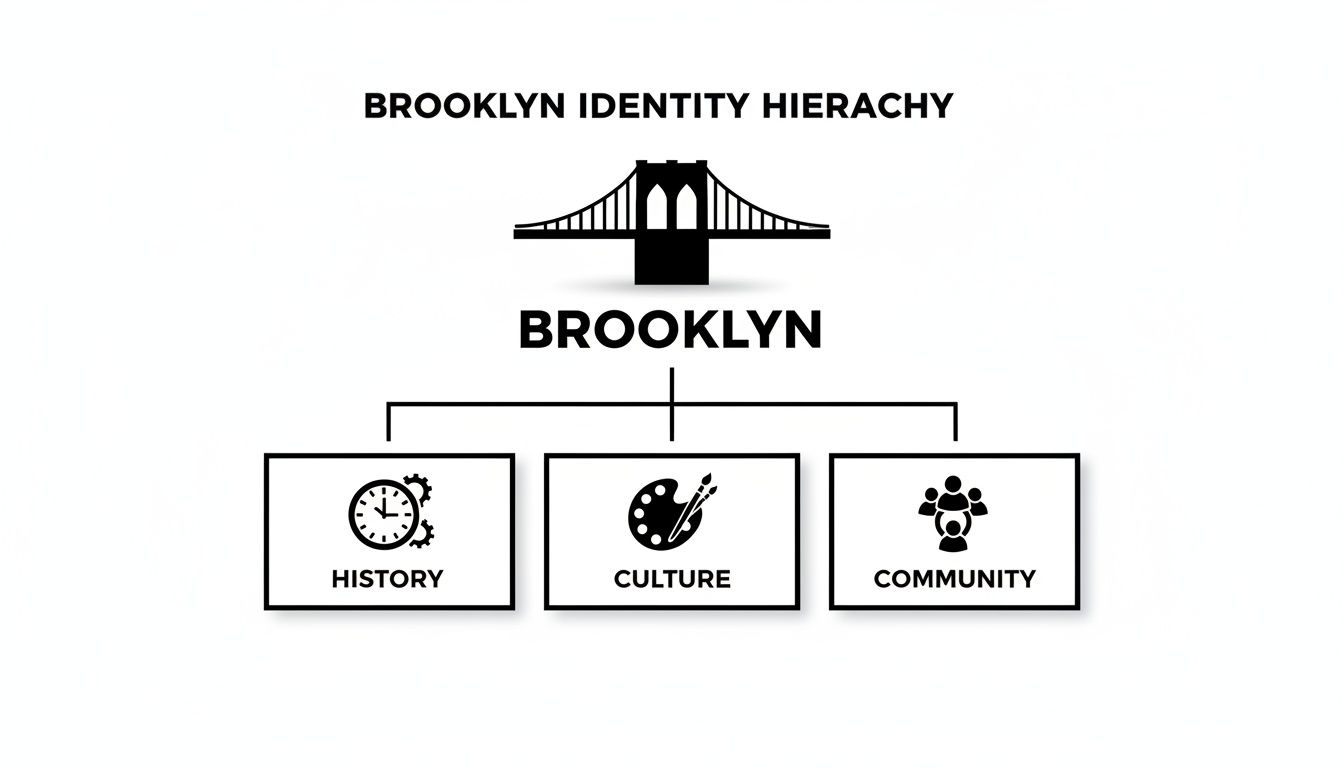
As you can see, it's all connected. The waves of immigration throughout history directly shaped the cultural landscape we see today, which in turn built the fiercely proud communities that define each area.
From Farmland to Factory Floor
The story of modern Brooklyn really kicked off when it shed its agricultural skin and became an industrial giant. Way back in 1636, Dutch farmers put down the first roots of what they called Breuckelen. Fast forward a couple of centuries, and by 1900, Brooklyn was an absolute powerhouse, home to 10,713 factories and over 100,000 workers.
That industrial grit is in the borough’s DNA. It shaped everything, from the industrial edge of Bushwick to the refined elegance of Brooklyn Heights, which became America's very first commuter suburb when steam ferries started chugging across the East River in the 1830s. You can learn more about Brooklyn's incredible historical growth on Britannica.
This foundation of industry and innovation set the perfect stage for the creative explosion that was to come. When the factories eventually fell silent, a new kind of pioneer arrived: the artists, musicians, and visionaries who looked at those cavernous lofts and forgotten warehouses and saw nothing but pure potential.
Brooklyn teaches you that reinvention isn't just possible—it's a way of life. It’s a place where forgotten spaces are reborn as canvases for new ideas, and where every street corner holds the potential for inspiration.
Think of this guide as your personal invitation to tap into that energy. We’re about to journey through these neighborhoods, uncovering the stories and cultural hotspots that make them tick. This isn't just a dry explainer; it's a tour through living history, designed to help you find the piece of Brooklyn that feels like it was made just for you.
Brooklyn's Neighborhood Personalities at a Glance
Feeling a bit overwhelmed? No worries. Use this quick guide to find the Brooklyn neighborhood that perfectly matches your vibe, whether you're chasing historic charm or creative energy.
| Neighborhood Category | The Vibe | Perfect For |
|---|---|---|
| Historic Brooklyn | Timeless, charming, and elegant with a strong sense of history. | History buffs, architecture lovers, and those seeking a quiet, classic NYC feel. |
| Hipster & Creative Hubs | Artsy, eclectic, and always buzzing with energy and new ideas. | Artists, musicians, trendsetters, and anyone who loves indie shops and great coffee. |
| Family-Friendly Enclaves | Green, spacious, and community-focused with a laid-back atmosphere. | Families, outdoor enthusiasts, and people looking for a slower pace within the city. |
| Up-and-Coming Hotspots | Dynamic, diverse, and rapidly evolving with a raw, authentic energy. | Adventurous spirits, entrepreneurs, and those who want to be part of the next big thing. |
This table is just a starting point, of course. The real magic happens when you hit the streets and feel the energy for yourself. Now, let's get into the specifics of what makes each of these areas so unique.
The Historic Heartbeat of Brownstone Brooklyn
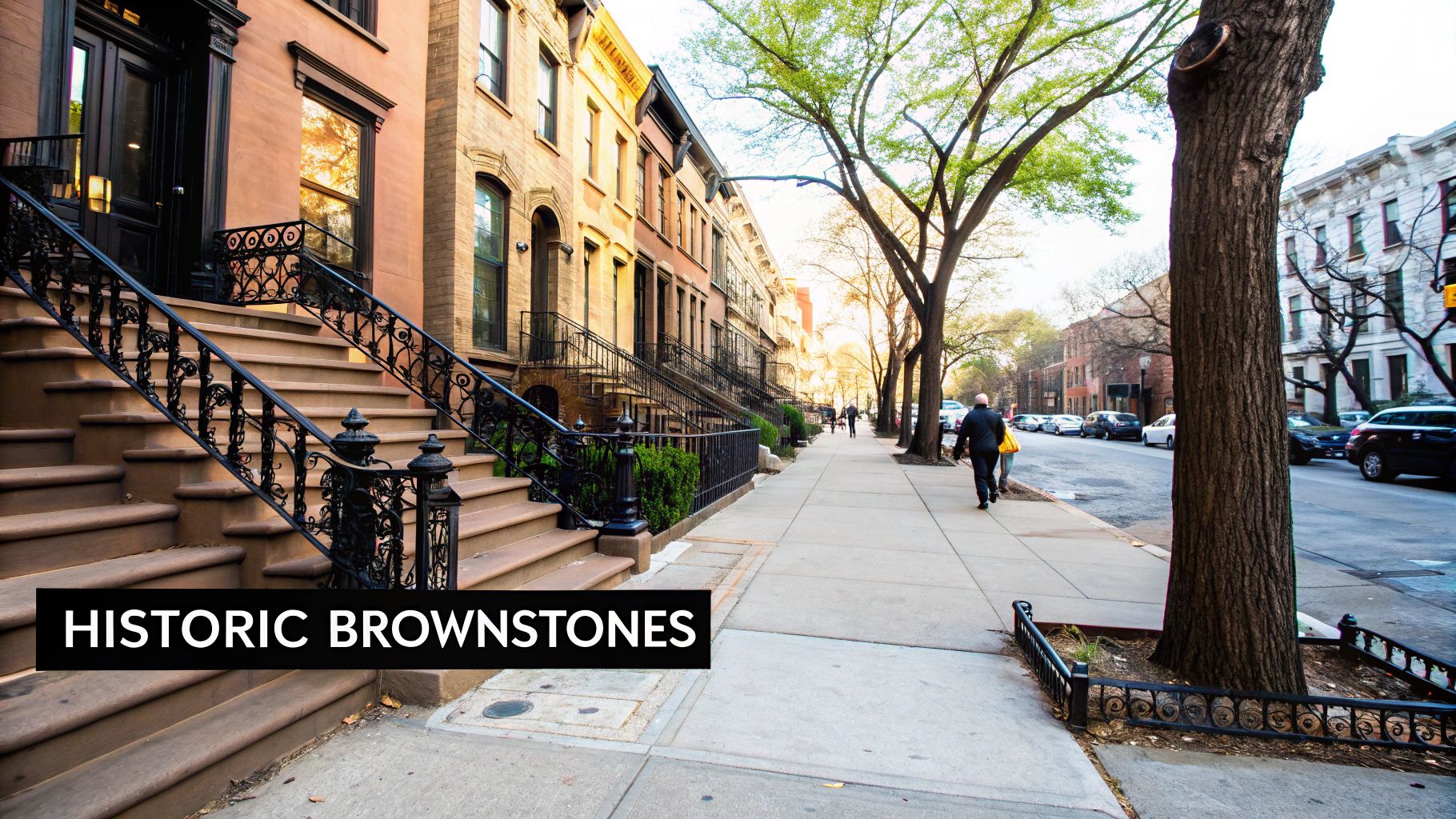
There’s a part of Brooklyn that feels like stepping through a portal in time. Picture it: quiet, gaslit streets, lined with rows of magnificent brownstone townhouses. Their ornate stoops seem to invite you into a story that began centuries ago. This is the soul of historic Brooklyn, a collection of neighborhoods—including Brooklyn Heights, Cobble Hill, and Park Slope—that have held onto the borough’s classic elegance and community spirit.
These areas are so much more than just pretty buildings; they tell a powerful story of vision and preservation. They stand as a testament to communities who saw the timeless value in their streets and fought like hell to protect them, creating a living museum of 19th-century New York right in our backyard. If you find inspiration in history, craftsmanship, and the enduring power of community, this is your corner of Brooklyn.
The Fight to Save a Neighborhood's Soul
Brooklyn Heights isn't just another beautiful neighborhood; it's a landmark of American preservation. Back in 1965, it became New York City's very first designated Historic District. This didn’t just happen—it was the result of a passionate, hard-fought battle by residents and activists who refused to let their neighborhood be bulldozed for "urban renewal."
They saw the unique character in their Federal-style row houses and Greek Revival mansions. They understood that losing them would mean losing a piece of the city's very soul. Their victory set a powerful precedent, inspiring communities all across the country to stand up and protect their architectural heritage. That act of defiance and foresight is the reason we can still get lost on these enchanting streets today.
The impact of their work is almost impossible to overstate. It ensured that the quiet corners where literary giants like Truman Capote penned masterpieces would remain untouched, and that the hidden mews and carriage houses would continue to charm generations to come. This inspiring story of community action is woven into the very fabric of the neighborhood.
Brooklyn Heights: A Storied Past
Brooklyn Heights feels like a cinematic dream of old New York. Its tranquil streets, perched on a bluff overlooking the East River, offer some of the most jaw-dropping views of the Manhattan skyline. This was, after all, America's very first "commuter suburb," a peaceful escape for merchants who crossed the river by ferry.
Brooklyn Heights reminds us that the most beautiful places are often the ones built with intention and preserved with passion. It’s a neighborhood that stands as a quiet rebellion against the disposable, celebrating the lasting beauty of history.
This area is an absolute treasure trove of architectural details and hidden gems. As you explore, you’ll discover:
- Fruit Streets: The charmingly named Pineapple, Orange, and Cranberry Streets are believed to have been named by a resident in the early 19th century who couldn't stand the pretentious names of the aristocratic landowners.
- Hidden Gardens: Behind the stately brownstone facades lie lush, private gardens that create a secret world of greenery, offering a true escape from the city bustle.
- The Promenade: This iconic walkway provides unparalleled panoramic views and is a beloved spot for a stroll, a run, or just a moment of quiet reflection.
To truly soak in this neighborhood's enchanting atmosphere, there's nothing better than a walk through its most historic blocks. You can discover more about its hidden stories and architectural marvels in our detailed Brooklyn Heights walking tour guide.
The Charm of Cobble Hill and Park Slope
Just south of Brooklyn Heights, Cobble Hill offers a similar historic vibe but with a slightly more relaxed, village-like feel. Its main artery, Court Street, is lined with independent boutiques, cozy cafes, and beloved family-owned Italian bakeries that have been serving the community for generations.
Meanwhile, Park Slope is the quintessential family-friendly brownstone neighborhood. Its streets, which slope gently down toward the magnificent Prospect Park, are filled with some of the most impressive Victorian architecture in the entire country. It’s a place where community is tangible, from the bustling farmers' market at Grand Army Plaza to the sound of laughter spilling out of playgrounds.
Together, these neighborhoods form the historic heartbeat of the borough. They are a powerful reminder that Brooklyn's character isn't just defined by what's new and trendy, but by the enduring beauty of what has been lovingly preserved.
The Creative Epicenters of Art and Innovation
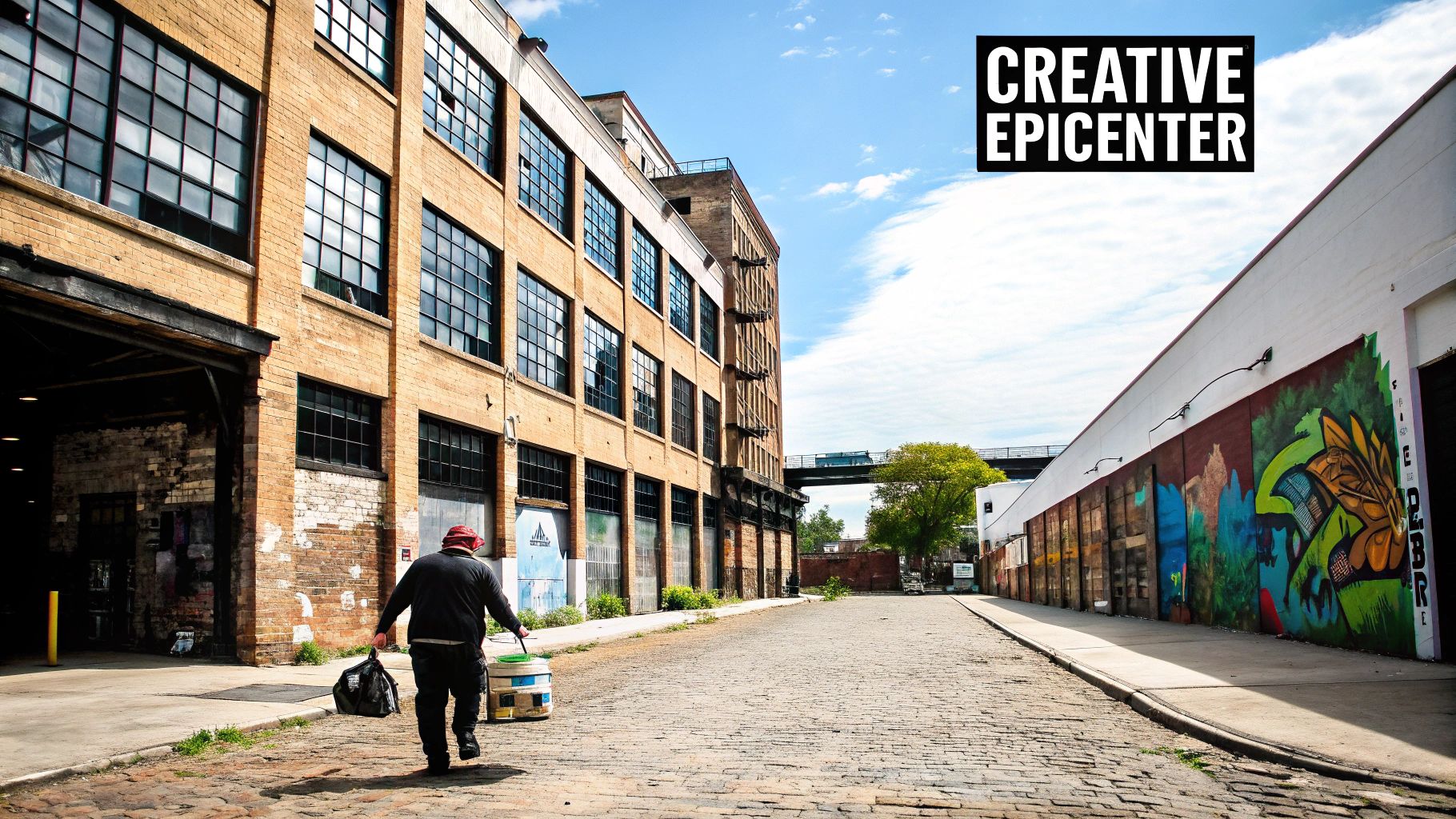
While Brownstone Brooklyn whispers stories of preservation, another side of the borough shouts a tale of radical reinvention. This is the Brooklyn forged in fire, born from industrial decay and hard times, where abandoned factories and desolate warehouses became the unlikely canvases for a global cultural movement.
Neighborhoods like Williamsburg, Bushwick, and DUMBO are the very heart of this creative rebellion. They stand for a powerful, inspiring idea: that beauty can emerge from grit, and that true innovation often happens on the margins. This is the story of how artists, musicians, and tech pioneers looked at forgotten landscapes and didn't see ruin—they saw potential. They built a new world from scratch, fueled by little more than raw talent and a relentless desire to create.
Williamsburg: The Birthplace of Brooklyn Cool
Long before "hipster" was a household word, Williamsburg was a gritty, working-class neighborhood reeling from the collapse of its manufacturing core. During the 1970s and 80s, as factories shuttered and buildings were left to rot, a wave of artists priced out of Manhattan saw something special. They crossed the East River and found the one thing they needed most: space.
These pioneers moved into cavernous, unheated lofts in old factories, carving out illegal living spaces and studios where they could finally work on a massive scale. It was anything but glamorous. It was a frontier. But that gritty reality forged an incredible sense of community and a fiercely independent creative scene that would eventually change the face of New York City forever.
These early artist communities weren't just looking for cheap rent; they were building an entirely new cultural ecosystem. They transformed post-industrial decay into a self-sustaining world of galleries, DIY music venues, and performance spaces, proving that art could thrive outside the established system.
That foundation of artistic rebellion is what still gives Williamsburg its undeniable soul, even underneath its modern gloss. The neighborhood is a living testament to how a handful of determined creators can lay the groundwork for a cultural phenomenon that ripples across the globe.
Bushwick: Where Streets Become a Gallery
Journey a little deeper into Brooklyn, and you’ll find another artistic revolution, this time on an even grander scale. Bushwick, an industrial neighborhood hit hard by economic decline, transformed itself into the world's most dynamic outdoor art gallery. Here, creativity wasn't confined to studios—it exploded onto the streets for everyone to see.
It all started when local artists and property owners looked at the neighborhood’s vast, blank industrial walls and saw an opportunity. They began inviting street artists from around the globe to paint, turning entire blocks into a sprawling, open-air museum. This grassroots movement, most famously embodied by The Bushwick Collective, is one of the most powerful examples of community-led revitalization you'll ever see.
This neighborhood tells one of the most inspirational Brooklyn neighborhoods explained stories, showing how art can literally breathe life back into a place. The result is a visual symphony of color and style, where you can find works by legendary graffiti artists right next to pieces by emerging international talents.
- A Global Canvas: Artists from over 30 countries have left their mark here, making it a truly international art destination.
- More Than Murals: The street art scene kicked off a broader cultural boom, sparking the opening of avant-garde galleries, experimental theaters, and one-of-a-kind performance venues. To see for yourself, check out our guide to the most inspiring Bushwick, Brooklyn art galleries.
- An Evolving Landscape: The art is always in motion. New murals constantly replace older ones, which means every visit feels like a fresh experience.
Walking through Bushwick is like stepping inside a living, breathing work of art. It’s an inspiring reminder that a community's identity can be reclaimed and redefined through sheer creative force.
DUMBO: The Intersection of Art and Tech
Tucked between the iconic Manhattan and Brooklyn Bridges is DUMBO, a neighborhood whose name—Down Under the Manhattan Bridge Overpass—perfectly captures its industrial roots. Just like in Williamsburg, its desolate, post-industrial vibe first attracted artists in the late 1970s who were drawn to the massive lofts and stunning waterfront views.
But DUMBO's story took a unique turn. While the first wave of artists established its creative credentials, another group of pioneers saw a different kind of potential: tech entrepreneurs. Throughout the 1990s and 2000s, the neighborhood quietly became a hub for digital agencies and startups, earning the nickname "Digital District."
Today, DUMBO is a fascinating blend of these two worlds. You can wander down cobblestone streets, pop into a high-end art gallery, and then walk past the sleek headquarters of a global tech company like Etsy. It’s a place where avant-garde performance art coexists with cutting-edge code. This unique fusion makes DUMBO a powerful symbol of modern Brooklyn—a place where creativity and innovation, in all their forms, are building the future.
The New Wave of Brooklyn Neighborhoods
Brooklyn’s story never really ends; it just keeps turning the page. While some neighborhoods proudly wear their history like a badge of honor and others are icons of cool, there's always a new wave cresting on the horizon. These are the places writing the next chapter—areas where a deep, powerful history is colliding with a fresh surge of art, community, and unstoppable energy.
We’re diving headfirst into this evolution, exploring three neighborhoods at the heart of the action: Bed-Stuy, Crown Heights, and Gowanus. These aren’t just "up-and-coming" spots; they are living, breathing examples of culture in motion. If you want to see history being made in real time, this is your front-row seat.
Bed-Stuy: A Renaissance of Culture and Community
Bedford-Stuyvesant, the legendary Bed-Stuy, has always been one of the most important centers of Black culture in America. This is the neighborhood that gave us icons like The Notorious B.I.G. and Jay-Z, its streets infused with a legacy of creativity and resilience. Today, that legacy is being celebrated and amplified in a powerful renaissance, driven by a new generation that honors its roots.
This isn’t about pushing out the old to make way for the new. It’s about building upon it. The neighborhood’s breathtaking, landmarked Victorian brownstones are being meticulously restored, their history cherished. Just take a walk down streets like Hancock or Macon, and you’ll feel a deep respect for the architectural soul of the place.
That reverence for the past creates a stunning backdrop for the new life buzzing through its veins. You'll find new coffee shops, indie bookstores, and incredible restaurants opening their doors, often run by longtime residents and newcomers working together. This beautiful blend creates an atmosphere where you can grab a drink at a classic dive like Do or Dive and then, just a few blocks away, stand in awe of a massive mural honoring Biggie Smalls.
Bed-Stuy is proof that a neighborhood can evolve without selling its soul. It’s a community-led revival, where new energy is intentionally woven into the rich cultural fabric that has defined the area for generations.
This dynamic makes Bed-Stuy one of the most essential places to understand in the ever-unfolding story of Brooklyn. It’s a testament to the power of heritage and the bright promise of the future.
Crown Heights: A Mosaic of Global Influences
Just south of Bed-Stuy, you'll find Crown Heights, a neighborhood that feels like the entire world packed into one vibrant community. For generations, it has been a true melting pot, known for its large Caribbean and Hasidic Jewish communities living side-by-side. This cultural mosaic is the very heart of the neighborhood, creating an incredible tapestry of sights, sounds, and flavors.
Nowhere is this spirit more alive than during the annual West Indian American Day Carnival, when Eastern Parkway explodes in a riot of color, joy, and sound. Millions of people, brilliant costumes, and the infectious rhythms of soca and calypso music take over the streets in one of New York City’s most incredible cultural celebrations.
Lately, Crown Heights has also become a magnet for creatives and young professionals drawn to its stunning architecture and community feel. This new energy has only added another fascinating layer to its identity. Franklin Avenue, especially, has blossomed into a bustling hub of incredible bars, innovative restaurants, and cozy cafes, offering everything from artisanal donuts to world-class cocktails.
- Architectural Gems: The neighborhood is filled with magnificent pre-war buildings and rows of stately limestone townhouses, especially in the Crown Heights North Historic District.
- Cultural Hubs: You're right on the doorstep of world-class institutions like the Brooklyn Museum and the Brooklyn Botanic Garden, offering endless inspiration.
- Green Spaces: Brower Park acts as a leafy, communal backyard where residents gather to relax, play, and connect.
Crown Heights is a masterclass in coexistence. It’s a place where different worlds don't just meet—they create something entirely new and beautiful together.
Gowanus: From Industrial Grit to Sustainable Innovation
If one neighborhood truly embodies the spirit of reinvention, it’s Gowanus. For more than a century, its identity was inseparable from the Gowanus Canal, a notoriously polluted industrial waterway lined with old warehouses and factories. For many, it was a forgotten, gritty corner of the borough. But for a new generation of artists, builders, and visionaries, it was a blank canvas.
Today, Gowanus is in the middle of a mind-blowing transformation. It's being reborn as a hub for sustainable design, boundary-pushing art, and creative manufacturing. The very grit that once defined it has become the foundation of its unique character. Old warehouses are now home to artist studios, vibrant co-working spaces, and even a massive, state-of-the-art climbing gym called The Cliffs at Gowanus.
This isn’t a story about erasing the past, but about reimagining it. Innovators are drawn to the raw, industrial aesthetic, turning old structures into something completely new. The canal itself, once a symbol of neglect, is now at the center of a massive cleanup effort, with passionate community groups fighting for a future where the waterway is a source of pride and recreation.
Gowanus is where you’ll find some of Brooklyn's most wonderfully weird and unconventional venues, from the kitschy-cool Royal Palms Shuffleboard Club to the amazing performance spaces at The Bell House. It's a neighborhood that champions the experimental, the unique, and the forward-thinking. This creative spirit, combined with its ongoing environmental renewal, makes Gowanus one of the most inspiring places to watch the future of Brooklyn unfold.
Family Havens and Seaside Escapes
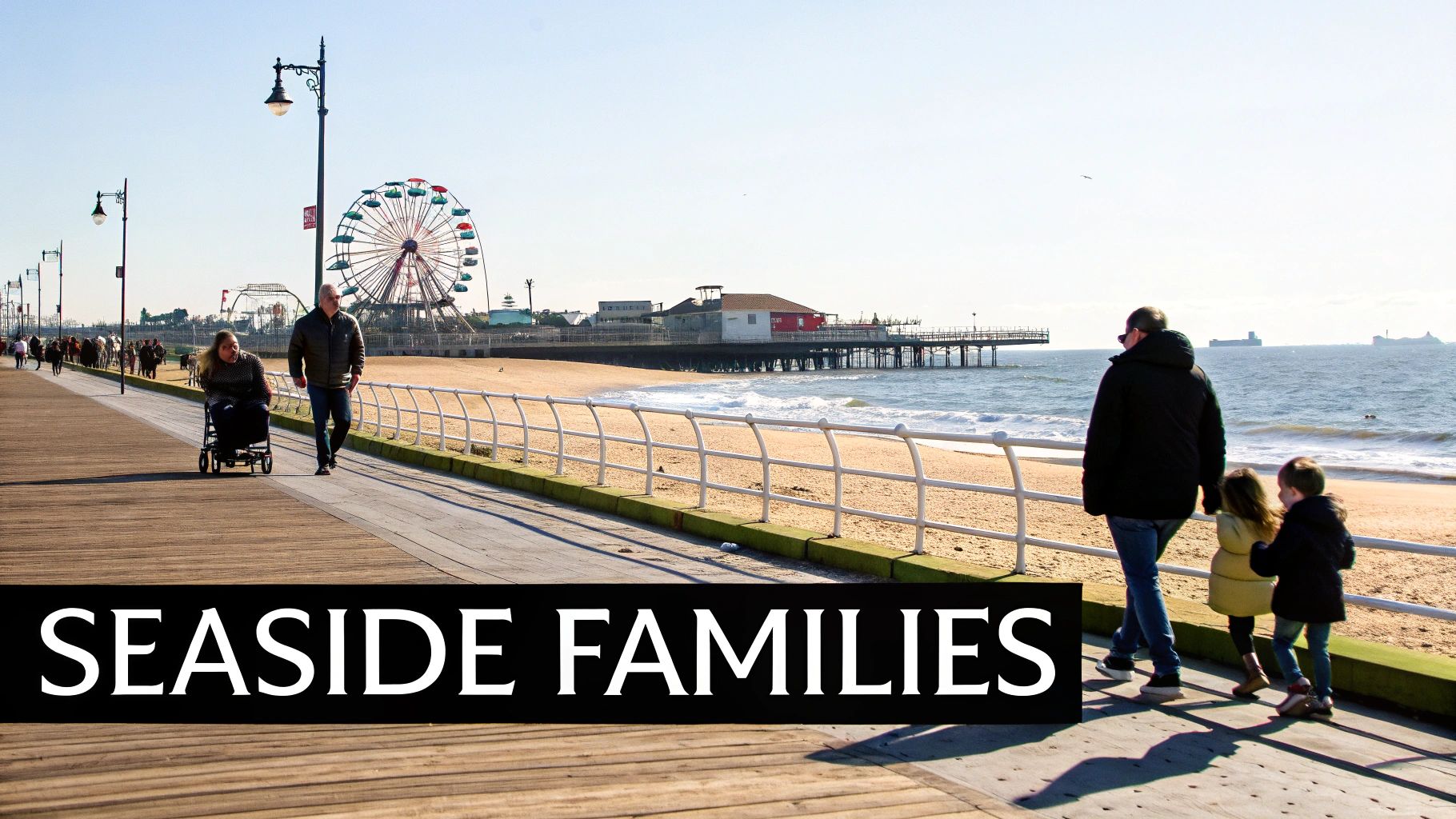
When you peel back the layers of brownstones and warehouses, you find a different side of Brooklyn. It’s a place where the borough's famous hustle softens, giving way to a gentler rhythm set by ocean breezes and a powerful sense of community. This is a Brooklyn defined not by ambition, but by the heartwarming feeling of coming home.
We’re heading out to the neighborhoods that offer a real sanctuary from the city’s relentless pace. We’ll start in the leafy, family-first enclaves of Windsor Terrace and Kensington, tucked right against the magnificent green heart of Prospect Park. Then, we’ll journey south to the unique coastal communities of Sheepshead Bay and Coney Island, where life is shaped by tradition and the sea.
This is the Brooklyn for anyone who finds their inspiration in genuine connection and the simple, profound joy of belonging.
The Prospect Park Sanctuaries: Windsor Terrace and Kensington
Tucked away on the southwestern edge of Prospect Park, Windsor Terrace feels like a secret the city has managed to keep. This place has a real small-town charm, and you can feel the deep roots put down by generations of families. The streets are quiet, lined with a mix of modest brick townhouses and charming wood-frame homes that create an atmosphere of unpretentious warmth.
Of course, its biggest draw is the backyard: 526 acres of rolling hills, deep woods, and serene lakes. For the people who live here, Prospect Park isn’t just a park—it’s an extension of their own homes. It’s where life happens.
Just next door, Kensington shares that same family-friendly vibe but adds a wonderfully diverse, global character to the mix. The streets here are a vibrant tapestry of cultures, which you can taste in the incredible array of local restaurants and markets. Kensington tells the classic Brooklyn story of a melting pot, not in a history book, but in the daily conversations between neighbors from every corner of the world.
These neighborhoods are a powerful reminder that community isn’t just about living next to each other. It’s about sharing spaces, sharing values, and building a collective sense of belonging that makes city life richer and more meaningful.
Both Windsor Terrace and Kensington offer a gift that’s priceless in New York City: a place to simply breathe. They prove you don’t have to choose between a tight-knit community and access to nature to call Brooklyn home.
Sheepshead Bay: Where Old-World Tradition Meets the Water
Travel a bit further south, and the urban grid gives way to the distinct, salty air of Sheepshead Bay. This is a neighborhood completely intertwined with the water, a place where fishing boats still line the piers and the pace of life feels set by the tides. For generations, this community has been a haven for those drawn to the sea, a maritime heritage that’s etched into its very soul.
The bay itself is the neighborhood’s heart, a scenic waterfront where people fish, stroll, and gather at restaurants that have been here for decades. Emmons Avenue, which traces the shoreline, is a beloved culinary destination famous for its incredible seafood and Eastern European cuisine.
Sheepshead Bay tells a story of enduring tradition. It’s a neighborhood that has held on tight to its character, resisting the breakneck changes happening elsewhere in the borough. Here, the inspiration comes from the steadfastness of the community and the timeless, calming presence of the water.
Coney Island: The Eternal Spirit of Joy
At the very southern edge of Brooklyn, you’ll find a place that’s so much more than a neighborhood—it’s an American icon. Coney Island is pure, unapologetic joy made real. For over a century, it has been New York City's playground, a magical escape where the everyday world melts away into a symphony of thrilling rides, carnival games, and the endless roar of the ocean.
Its story is one of incredible resilience. Coney Island has faced its share of tough times, but its spirit has never, ever faded. It’s a place of timeless rituals: the first bite of a Nathan's Famous hot dog, the breathtaking view from the top of the Wonder Wheel, a slow walk along the historic Riegelmann Boardwalk. This is why it remains a beloved destination for families from every corner of the city and the world.
To really get it, you have to be there. You can dive into all its legendary attractions and hidden gems in our complete guide to unforgettable things to do in Coney Island. Coney Island stands as a powerful, inspiring reminder that in a city defined by change, some joys are truly timeless.
Wear Your Corner of Brooklyn
Every neighborhood in Brooklyn has its own pulse, its own undeniable identity. It’s more than just a place on a map; it's a feeling you get walking down the street, a piece of a story that’s constantly being written.
Maybe you feel a pull towards the historic brownstones of Park Slope, or the raw, creative energy crackling through Bushwick. Perhaps it’s the nostalgic, salt-air charm of Coney Island that calls to you. Whatever your corner is, that connection becomes part of your own story. After all, the real spirit of Brooklyn isn’t found in the buildings, but in the people who make these streets home.
That’s the very spirit we wanted to capture. Our gear is more than just fabric and ink; it's about carrying that unique culture with you. Think of it as a wearable piece of the borough's incredible creative soul.
We see each design as a tribute to the authentic character and quiet stories that make these communities what they are. It’s a way to represent your roots, hold onto a memory, or just show the world where you feel you belong.
So go ahead, find the design that feels like you. Wear your neighborhood with the pride it deserves, and carry a piece of Brooklyn's inspiring energy wherever you go.
Ready to find your match? Explore The Brooklyn Initiative's neighborhood collections and find the piece that tells your story.
Frequently Asked Questions About Brooklyn Neighborhoods
Brooklyn is a borough of stories, a place of constant reinvention where every street corner has something to say. To help you find your own story here, we've put together answers to the questions we get asked most often by newcomers and curious visitors.
Think of this as your field guide to tapping into the creative pulse of the city's most dynamic borough.
Which Brooklyn Neighborhood Is Best For Young Professionals?
If you're a young professional looking for a neighborhood that matches your drive and creativity, you've got some incredible options. Williamsburg, Bushwick, and Downtown Brooklyn are probably at the top of your list, and for good reason. Williamsburg is the undeniable trendsetter, a hub of culture and cool that never sleeps. A little further east, Bushwick delivers a grittier, industrial-chic vibe fueled by one of the world's most impressive street art scenes.
Then there's Downtown Brooklyn. It offers a sleek, modern high-rise lifestyle where convenience is king. With unmatched subway access, the entire city is truly your oyster. All three are packed with the essentials: coffee shops for the morning grind, inventive restaurants for winding down, and plenty of co-working spaces to connect and create.
What Is The Most Family-Friendly Neighborhood In Brooklyn?
When it comes to a family-friendly vibe, Park Slope is practically legendary. Picture classic, tree-lined streets full of stunning brownstones, with the magnificent Prospect Park as your backyard. The neighborhood is celebrated for its fantastic schools, tight-knit community groups, and an endless supply of things for kids to do.
Brooklyn’s family-friendly pockets prove you don’t have to sacrifice a sense of community for big-city living. They’re sanctuaries where families can put down deep roots, right in the middle of it all.
Don't overlook gems like Windsor Terrace and Carroll Gardens, either. Both have a quieter, almost village-like charm, with gorgeous green spaces and a welcoming feel that helps new families settle in and feel like locals from the moment they arrive.
How Do I Get Around Brooklyn Using Public Transit?
Getting around Brooklyn is part of the adventure, and the public transit system is your key. The subway is the lifeblood of the borough, with lines weaving through nearly every neighborhood and offering a straight shot into Manhattan and Queens. The bus network is just as extensive, filling in the gaps and taking you to those off-the-beaten-path spots.
But for a ride that will genuinely inspire you, you have to try the NYC Ferry. Cruising along the East River between spots like DUMBO, Williamsburg, and Red Hook offers the kind of jaw-dropping skyline views that remind you just how special this place is.
Ready to rep your neighborhood? The Brooklyn Initiative makes unique, limited-edition apparel that celebrates the spirit of Brooklyn. Find a design that tells your story at https://thebrooklyninitiative.com.